Mini Japanese Garden for Small Spaces: Calm, Balance, and Quiet Beauty
A Japanese garden is not about size.
It is about feeling.
Even the smallest space can hold peace.
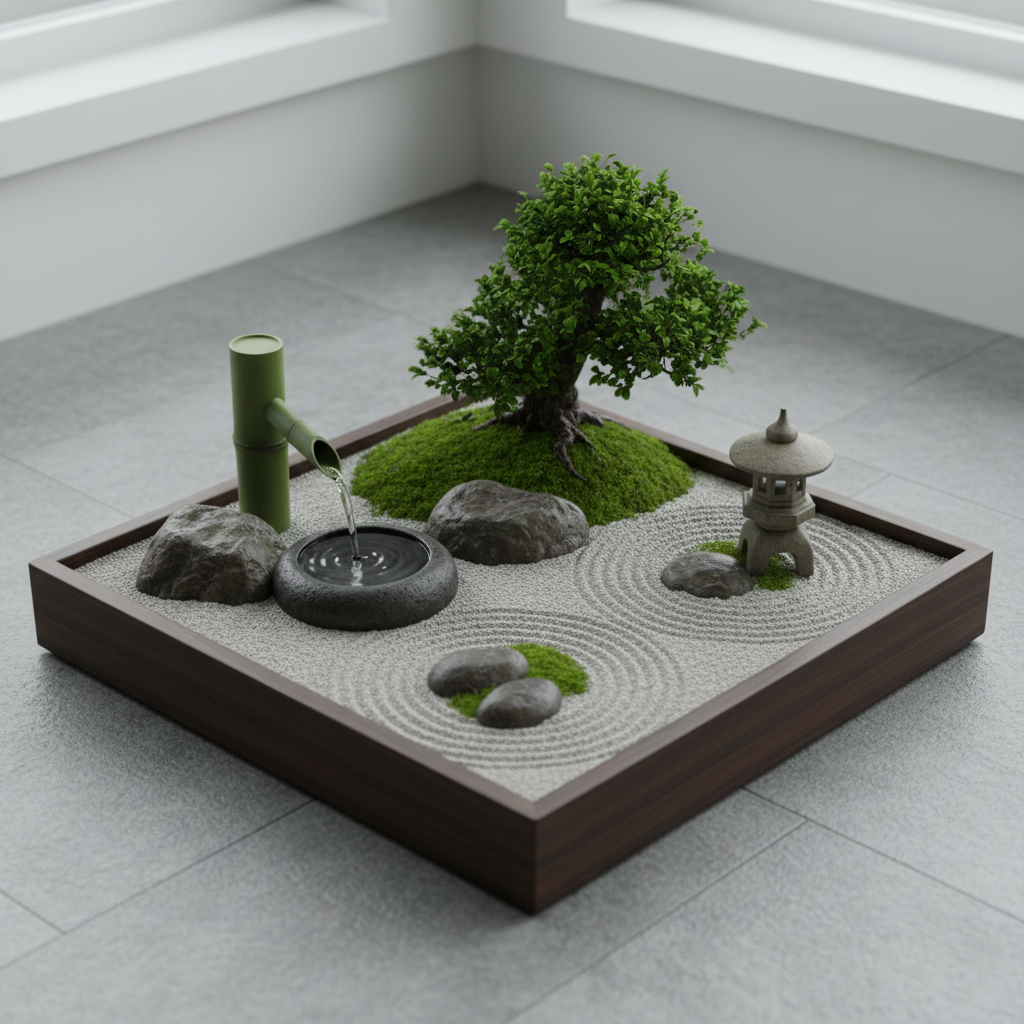
A mini Japanese garden invites stillness into daily life.
With thoughtful design, small areas become meaningful retreats.
Core Principles of a Mini Japanese Garden
Japanese gardens follow philosophy, not decoration.
Every element has purpose.
Balance and simplicity matter most.
Nothing feels random.
Key Design Principles
Asymmetry over symmetry
Empty space for calm
Natural materials only
Subtle movement and flow
Avoid filling every corner.
Silence is part of the design.
A mini garden should feel timeless.
Not styled or trendy.
Best Layout Ideas for Small Japanese Gardens
Small spaces need clear structure.
Flow matters more than size.
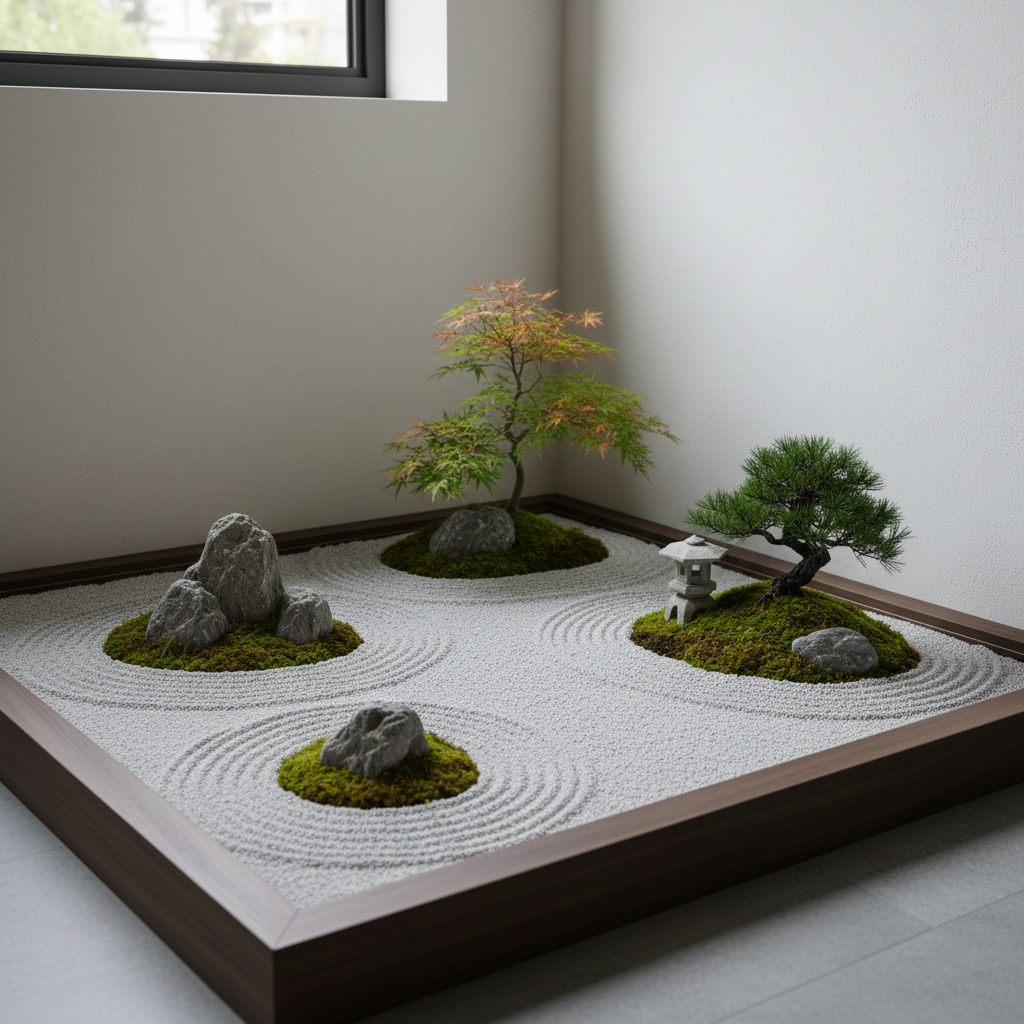
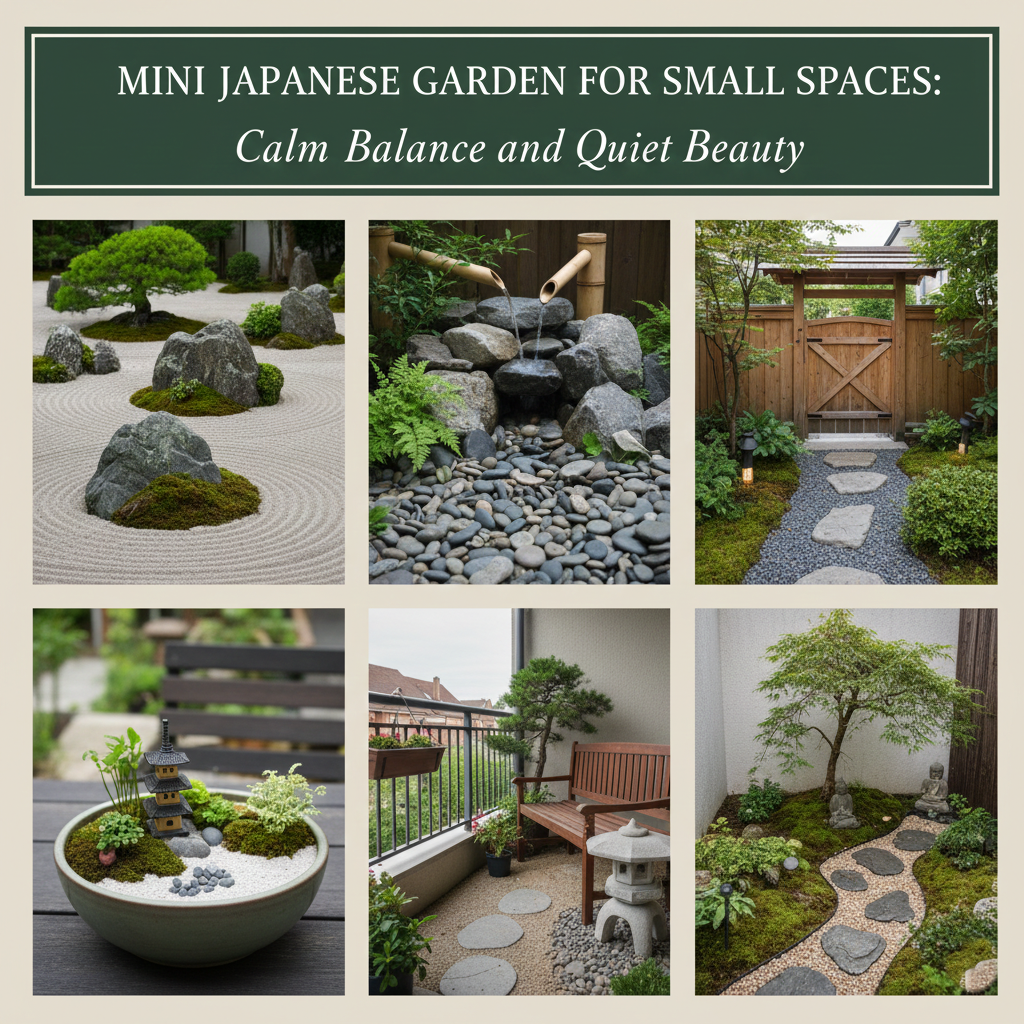
Corners, balconies, and patios work well.
Even narrow areas can feel expansive.
Smart Layout Options
Corner garden with stone focus
Linear path with gravel
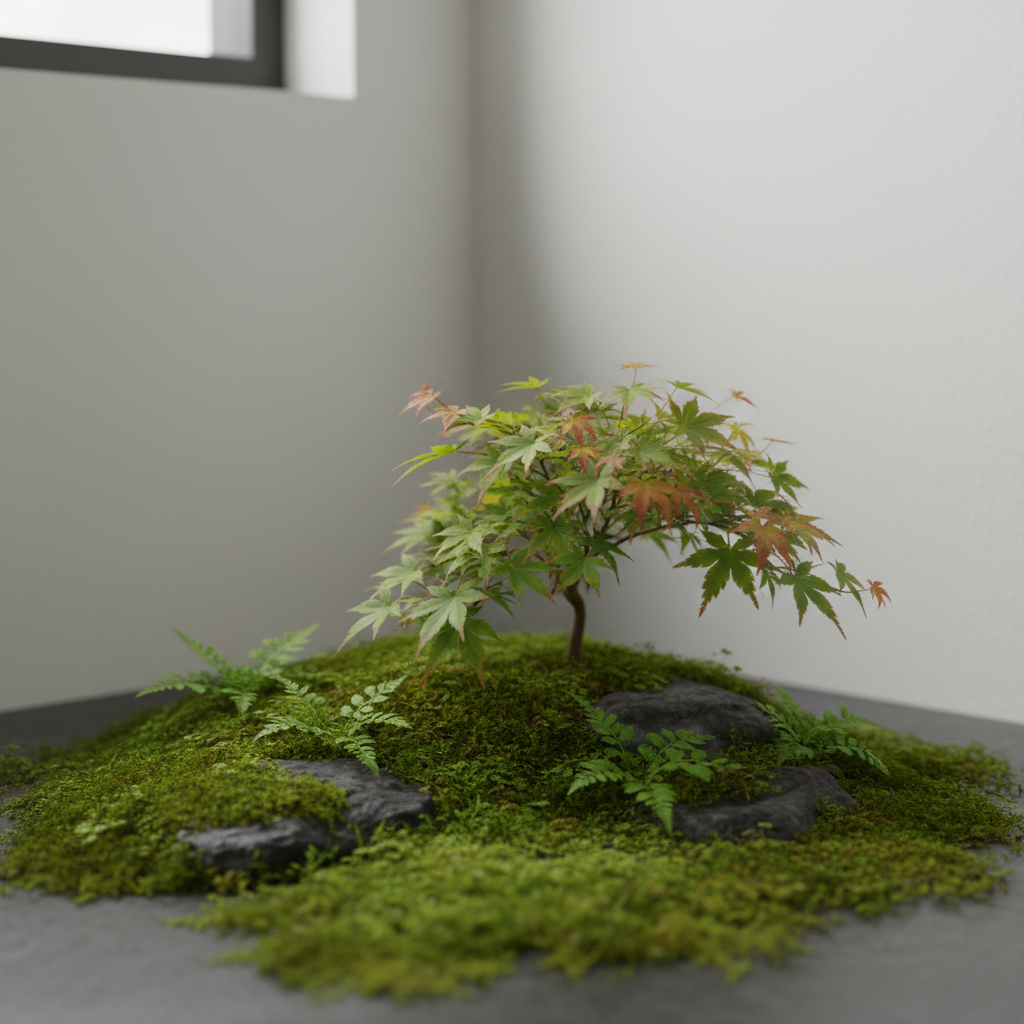
Circular moss arrangement
Raised tray garden for patios
Keep sightlines open.
This creates visual depth.
Good layout makes the garden breathe.
It feels calm, not crowded.
Choosing Stones, Gravel, and Hardscape Elements
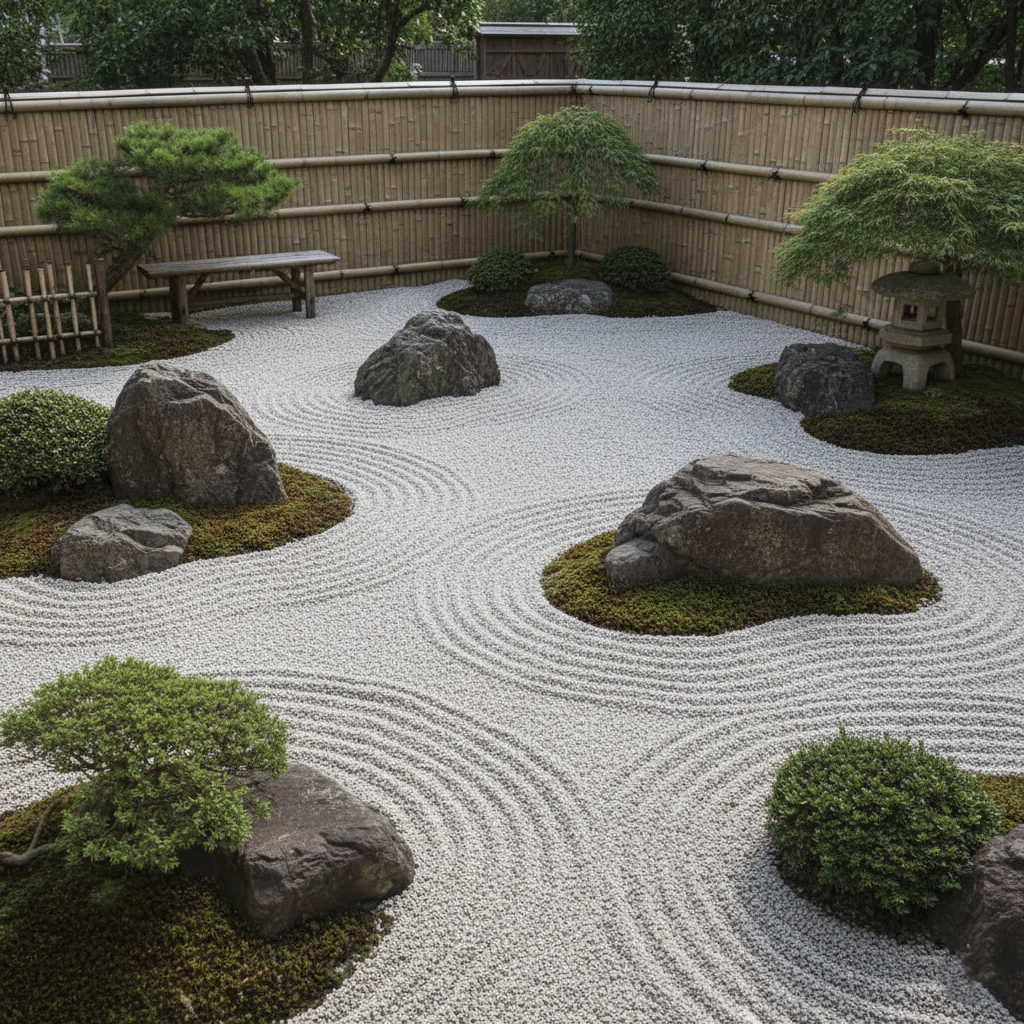
Stone is the backbone of Japanese gardens.
It represents permanence.
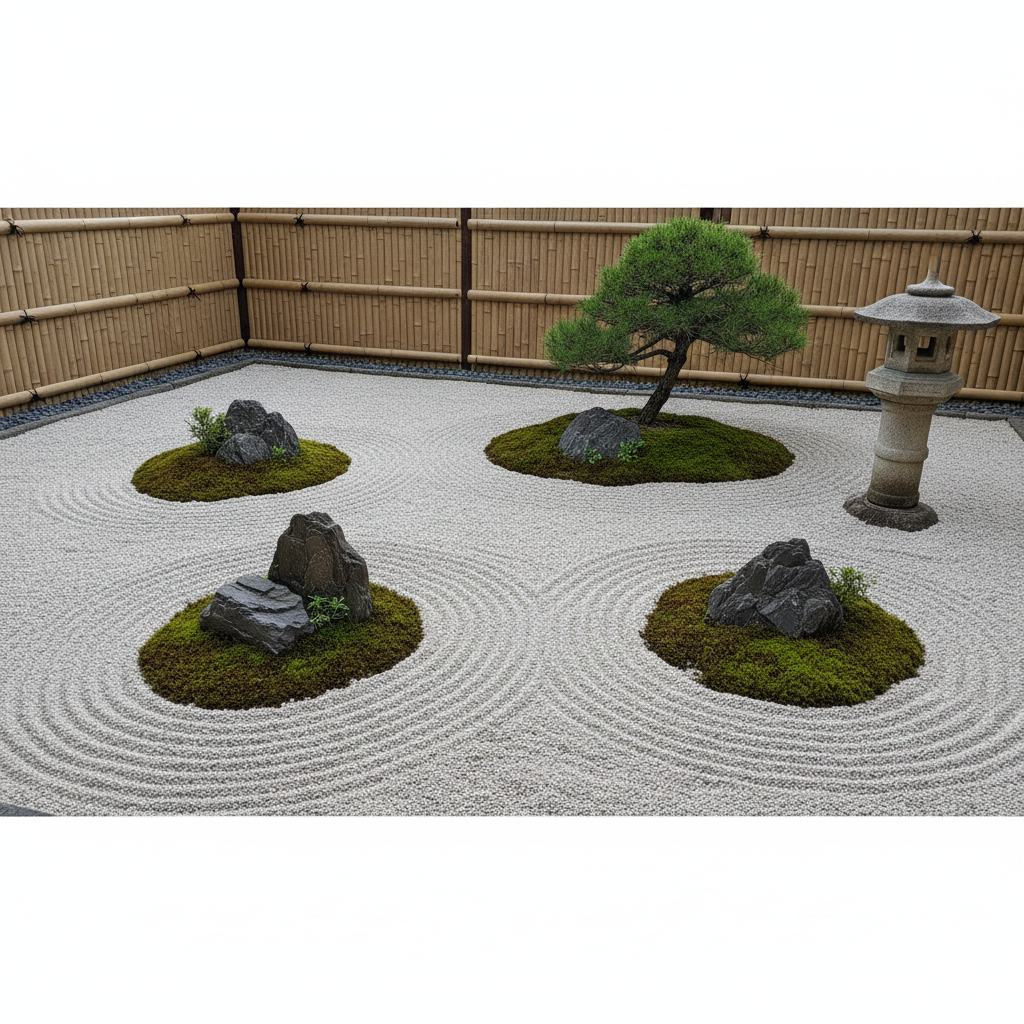
Gravel symbolizes water and movement.
Raked patterns add rhythm.
Essential Hardscape Elements
Natural stones with irregular shapes
White or gray gravel
Stone lanterns in small scale
Stepping stones for guidance
Bury stones slightly.
They should feel settled.
Hardscape creates structure.
It holds the garden together.
Plants That Work Best in Mini Japanese Gardens
Stone is the backbone of Japanese gardens.
It represents permanence.
Gravel symbolizes water and movement.
Raked patterns add rhythm.
Essential Hardscape Elements
Natural stones with irregular shapes
White or gray gravel
Stone lanterns in small scale
Stepping stones for guidance
Bury stones slightly.
They should feel settled.
Hardscape creates structure.
It holds the garden together.
Adding Water and Decorative Accents Subtly
Water adds life and sound.
It should feel gentle.
Even symbolic water works well.
Gravel patterns often replace real water.
Subtle Accent Ideas
Small stone water basin
Bamboo water feature
Simple wooden bridge
Single stone lantern
Use accents sparingly.
One focal piece is enough.
The goal is reflection.
Not decoration.
Final Thoughts: Why Mini Japanese Gardens Feel So Powerful
A mini Japanese garden teaches presence.
It slows the mind.
It proves that peace does not need space.
Only intention.
With thoughtful design, even the smallest corner becomes a sanctuary.
A place to pause, breathe, and reconnect.