Gemini_Generated_Image_jvtpmsjvtpmsjvtp

4 Magical Cozy Plant Corner Ideas with Fairy Lights and Trailing Vines

Gemini_Generated_Image_jvtpmsjvtpmsjvtp

4 Magical Cozy Plant Corner Ideas with Fairy Lights and Trailing Vines

Turn any forgotten corner into an enchanting indoor oasis with lush trailing plants, warm fairy lights, and cozy shelving. These biophilic-inspired setups are perfect for creating a peaceful reading nook or wellness retreat in 2026.

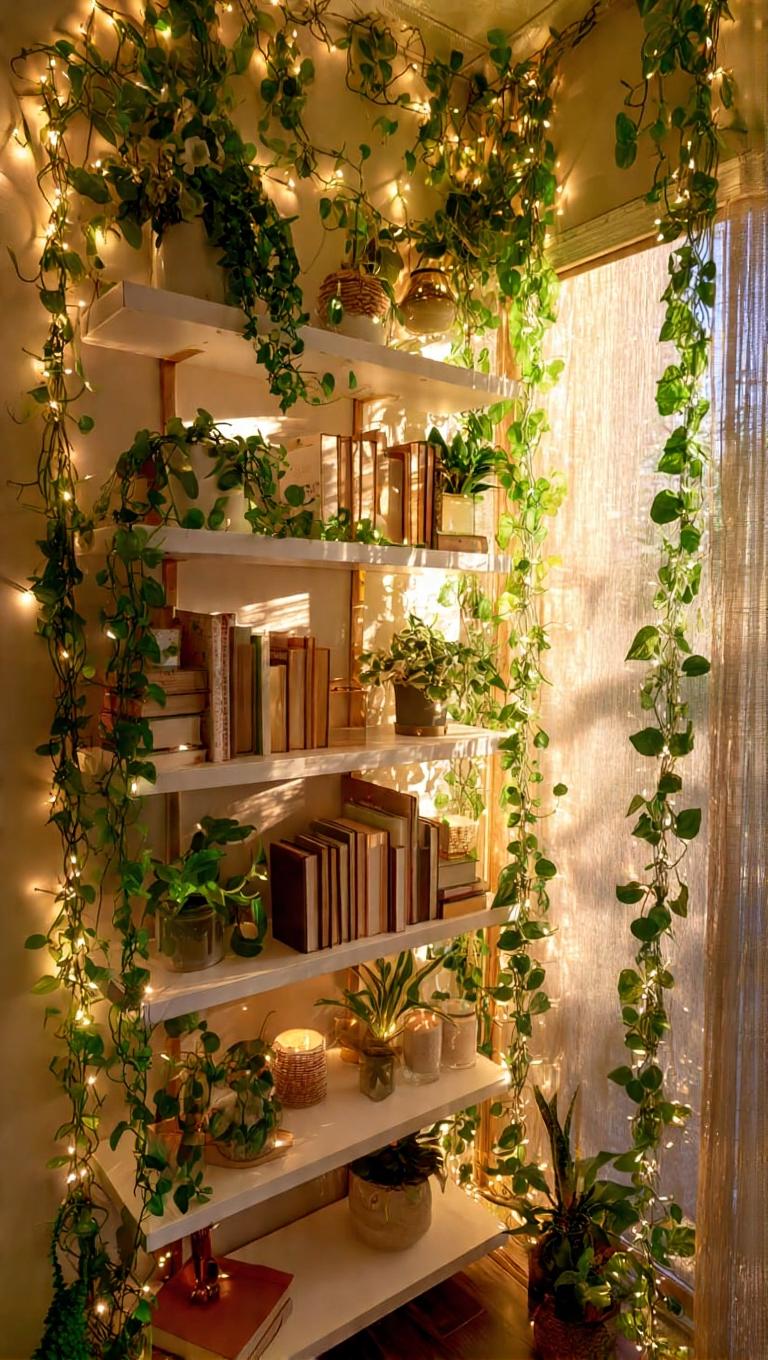
Sunlit Bookshelf with Cascading Pothos and Fairy Light Glow

Fill white floating shelves with vintage books and small potted plants. Let long pothos vines trail down dramatically while warm fairy string lights weave through for a soft, magical evening ambiance. The natural sunlight filtering through adds an extra layer of serenity.

These shelves work exceptionally well in corners, near windows, or narrow wall sections where floor furniture is impractical.

l8

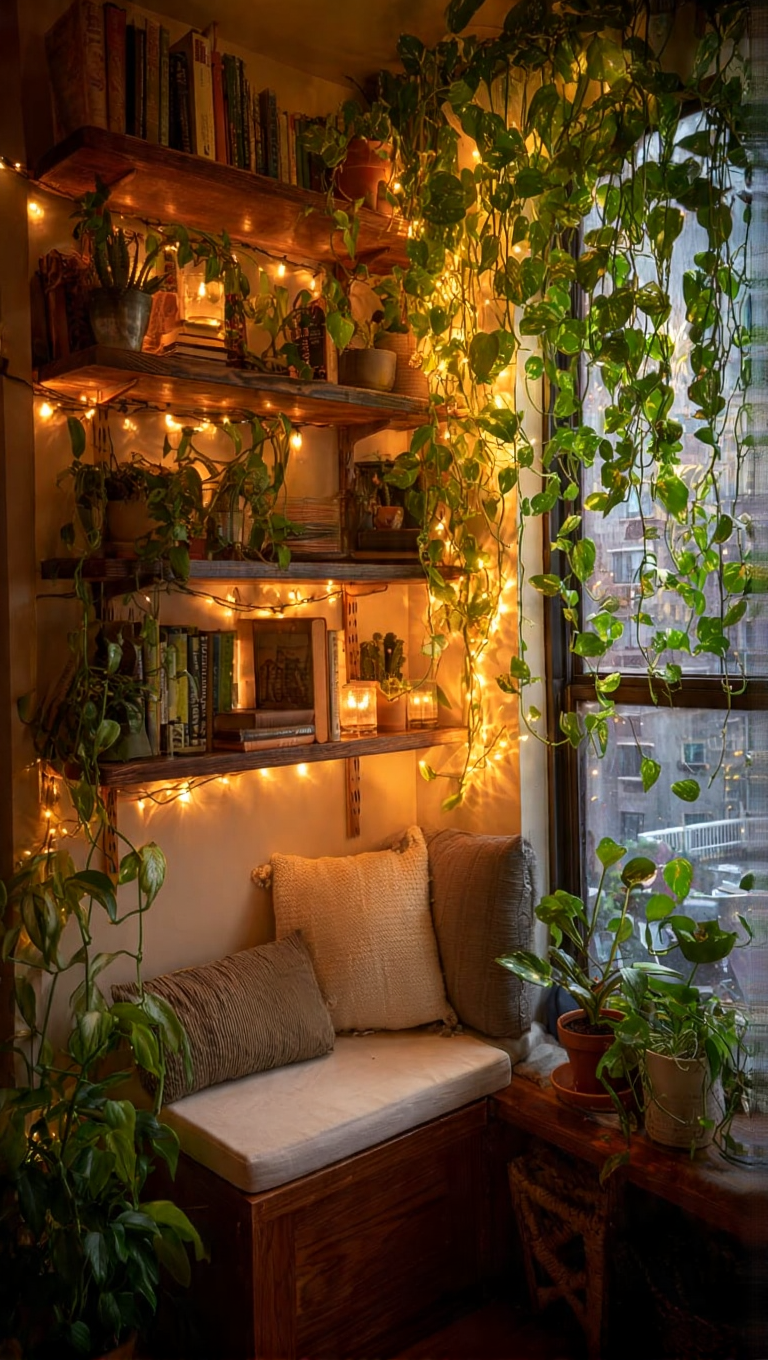
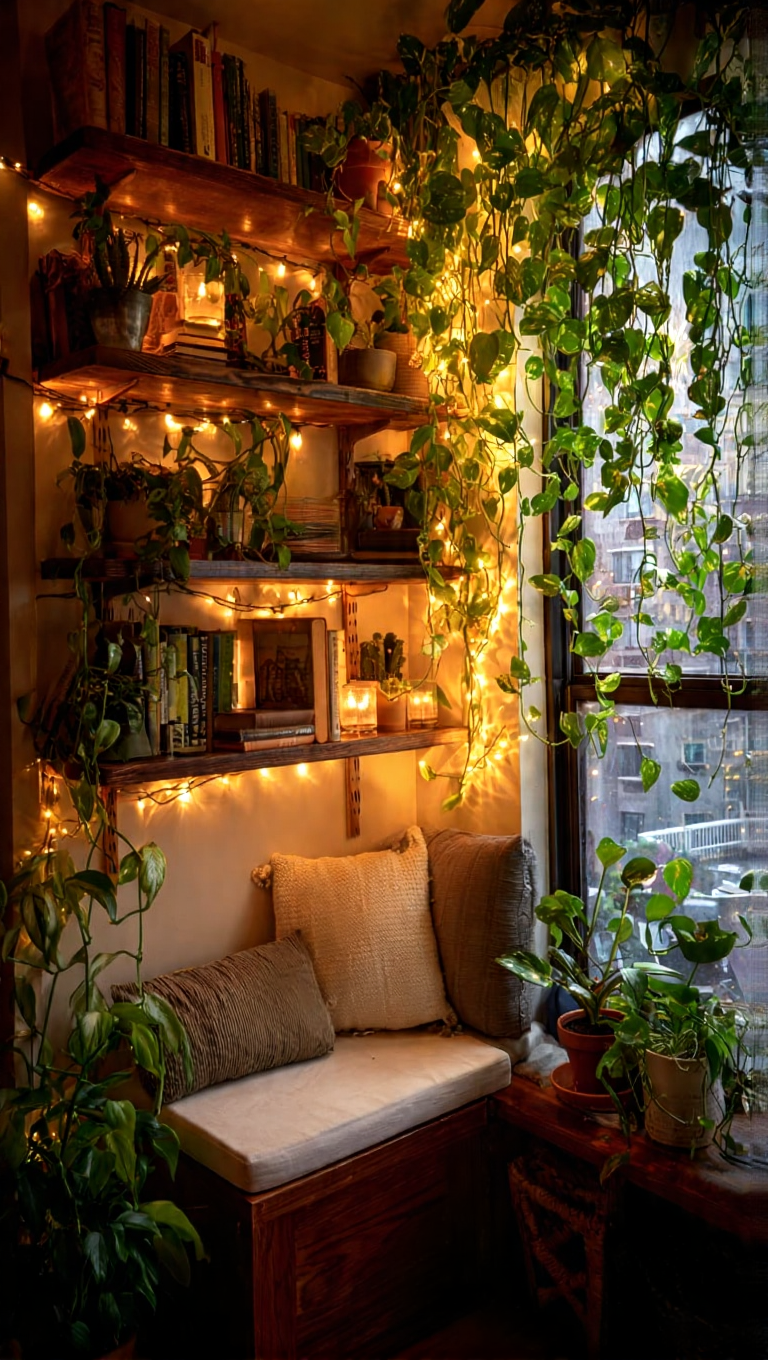
Rustic Window Nook with Trailing Vines and Cozy Bench

Create a dreamy window seat surrounded by wooden shelves packed with books and greenery. Drape fairy lights along the edges and let cascading vines frame the view. Plush neutral cushions make this the ultimate spot for quiet moments.

l1

Urban Jungle Corner with Dense Greenery and Hidden Lights

Transform a simple corner with layered wooden shelves overflowing with trailing plants. Warm fairy lights tucked behind the vines create a glowing backdrop, blending city views with lush indoor nature for a perfect cozy escape.

l4

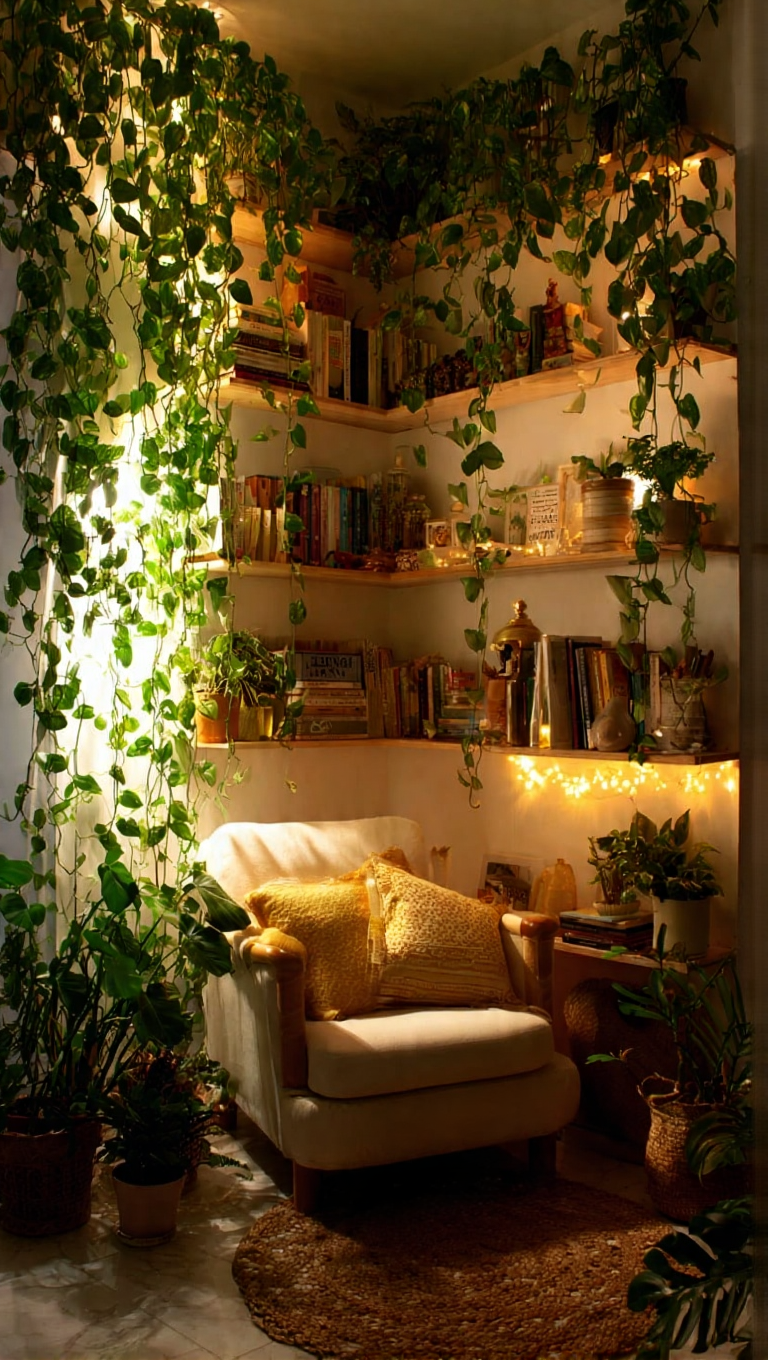
Boho Reading Chair Surrounded by Vines and Fairy Lights

Place a comfortable chair under high shelves bursting with pothos and books. Let the vines hang like a natural curtain while fairy lights add warmth and sparkle. Natural textures and woven details complete this inviting bohemian nook.

By stacking shelves vertically and varying plant sizes, you create a green feature wall that feels expansive rather than cluttered.

l5

Final Thoughts: Are Indoor Vertical Plant Displays Worth It?

Absolutely. Indoor vertical plant displays offer a rare combination of functionality, beauty, and wellness benefits. They improve air quality, reduce visual emptiness, and create a calming environment—especially when enhanced with thoughtful lighting and natural materials.

Inspired by the images above, this design approach proves that even the smallest wall or corner can become a living art installation with the right balance of structure and greenery.

If you are designing for Pinterest-driven traffic or lifestyle blogs, vertical plant displays are a high-engagement, evergreen topic that performs exceptionally well year-round.
Gemini_Generated_Image_jvtpmsjvtpmsjvtp

Indoor Vertical Plant Display Ideas That Transform Empty Walls Into Living Art

Gemini_Generated_Image_jvtpmsjvtpmsjvtp

Indoor Vertical Plant Display Ideas That Transform Empty Walls Into Living Art

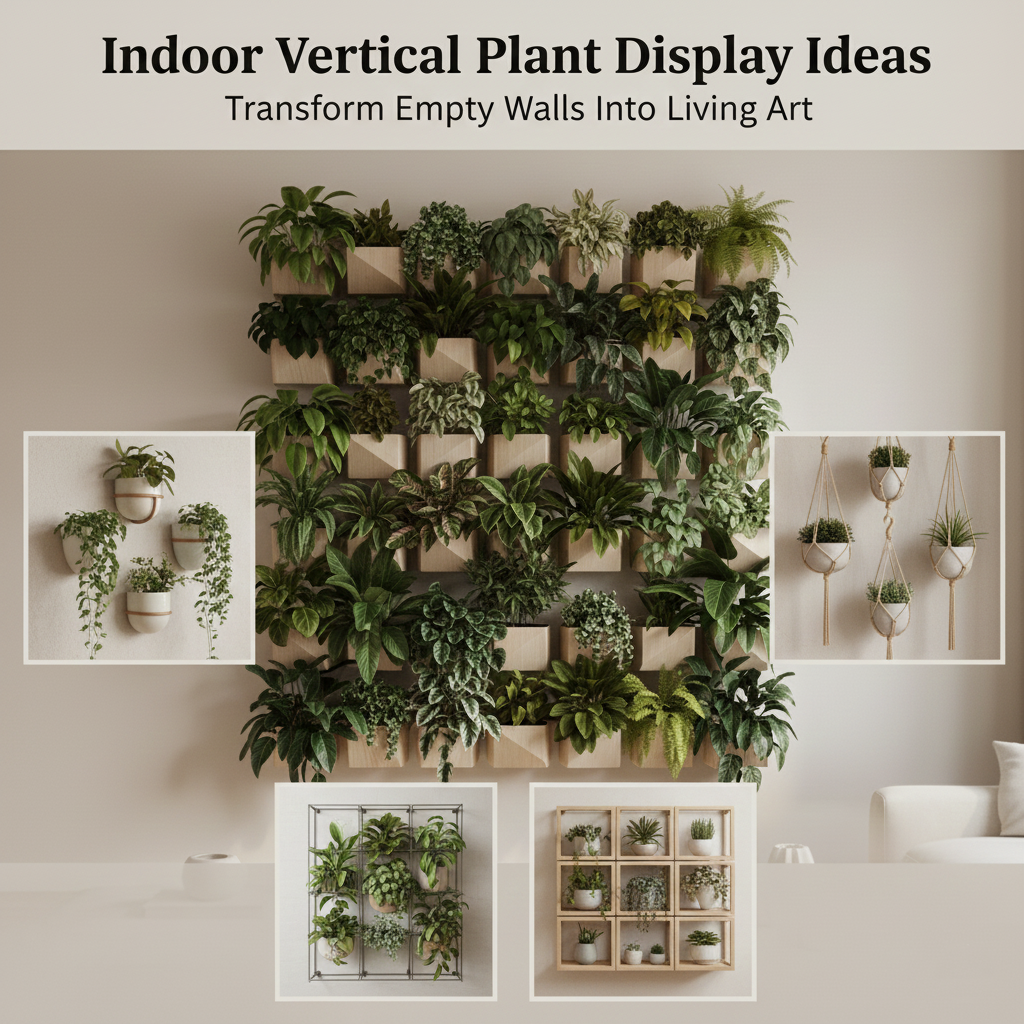
Indoor vertical plant displays are no longer just about saving space—they are now a design statement. By combining warm wood shelving, trailing greenery, and ambient lighting, you can turn unused corners into calming, high-impact focal points. The images above perfectly demonstrate how thoughtful plant styling can elevate interiors while remaining practical and low-maintenance.

This guide explores five essential aspects of creating stunning indoor plant displays, inspired directly by the showcased designs.

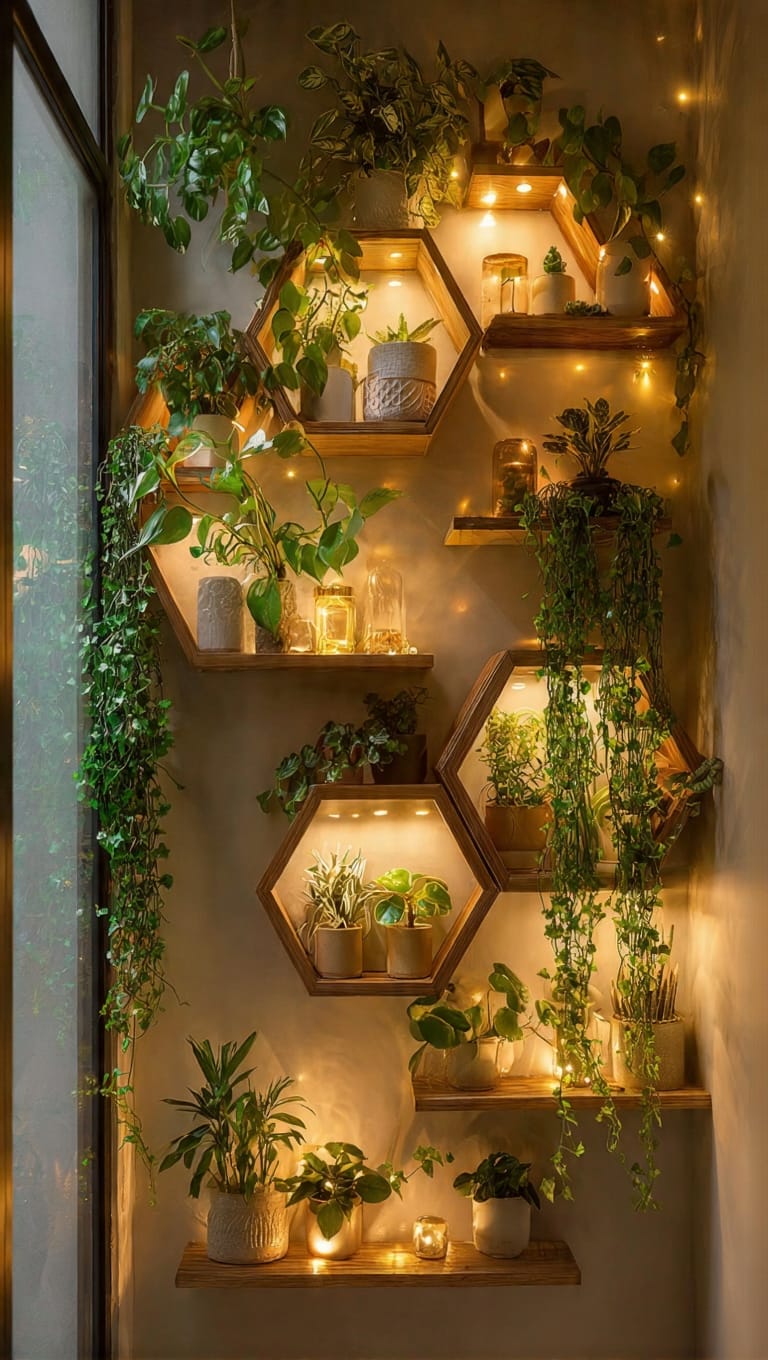
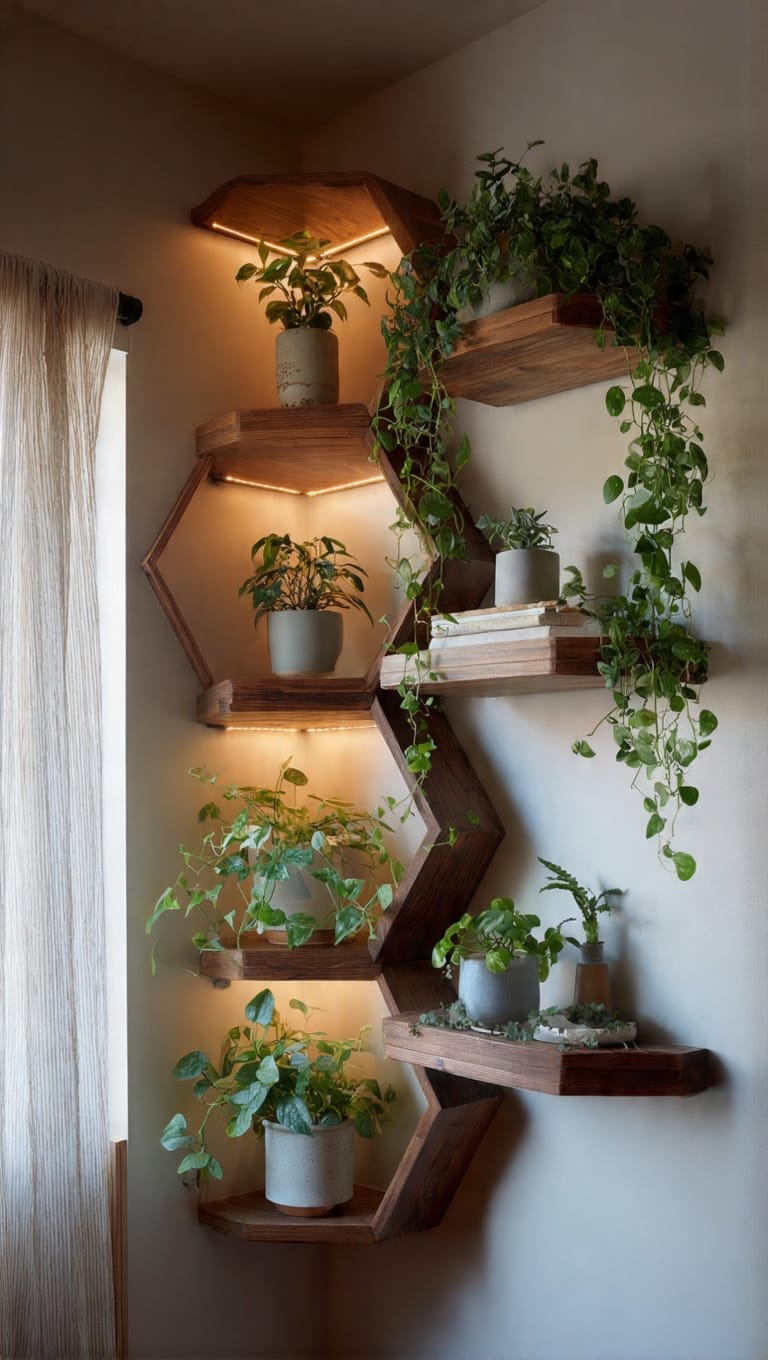
Geometric Wooden Shelves for a Modern Organic Look

Hexagonal and angular wooden shelves instantly add architectural interest to plain walls. Unlike traditional straight shelving, geometric shapes create rhythm and visual movement, making the plant display feel intentional and curated. Natural wood tones balance greenery beautifully, adding warmth while keeping the space modern.

These shelves work exceptionally well in corners, near windows, or narrow wall sections where floor furniture is impractical.

WhatsApp Image 2026-01-08 at 3.18.26 AM

Layered Lighting to Highlight Plants and Texture

Integrated LED lighting beneath shelves transforms plants into living décor, especially during evening hours. Warm white or soft amber lights enhance leaf texture, cast gentle shadows, and create a calming atmosphere without overpowering the room.

Lighting also allows plants to remain visually prominent even in low-light interiors, making it both a functional and decorative addition.

WhatsApp Image 2026-01-08 at 3.18.26 AM (2)

Mixing Trailing and Upright Plants for Depth

The most striking displays combine cascading plants like pothos, philodendron, or ivy with upright varieties such as snake plants or peace lilies. Trailing vines soften sharp shelf edges and draw the eye vertically, while structured plants provide balance and contrast.

This layered approach adds depth and makes the display feel lush without overcrowding.

WhatsApp Image 2026-01-08 at 3.18.26 AM (1)

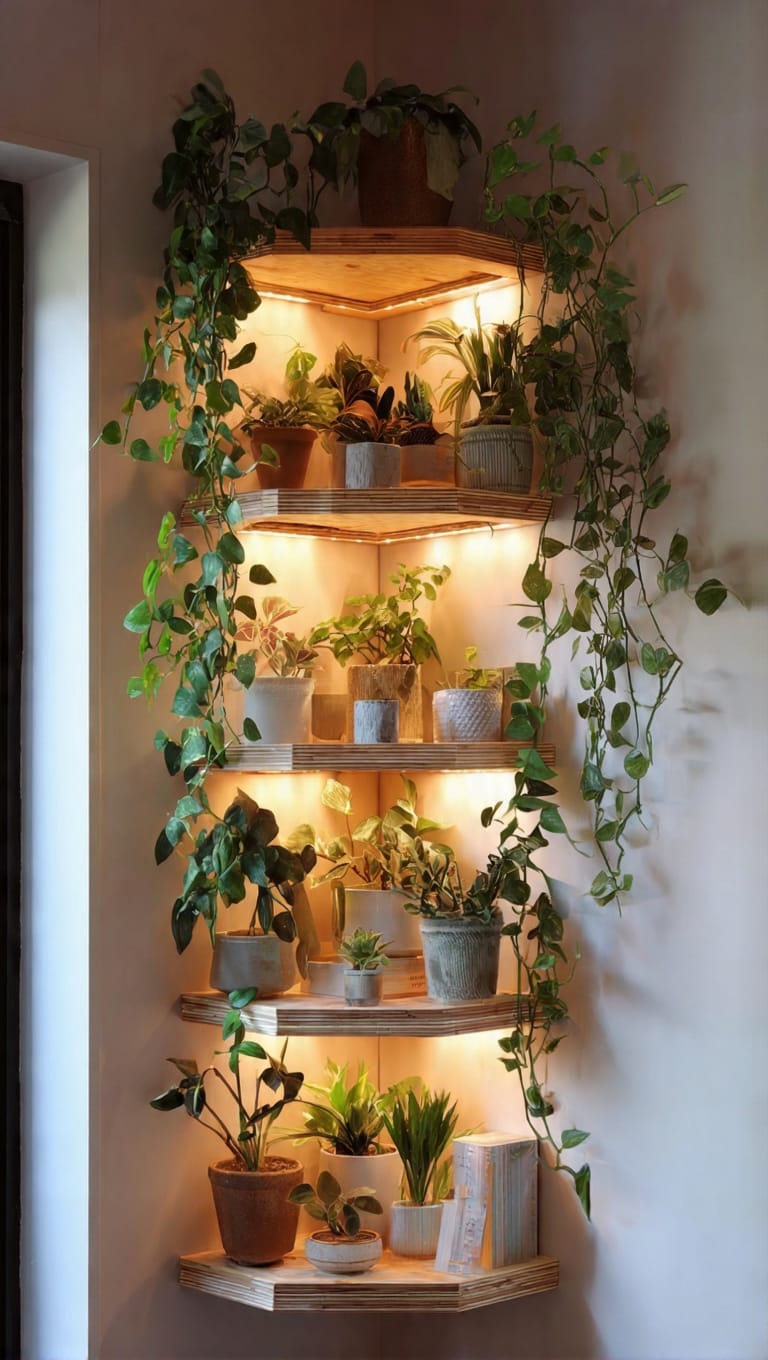
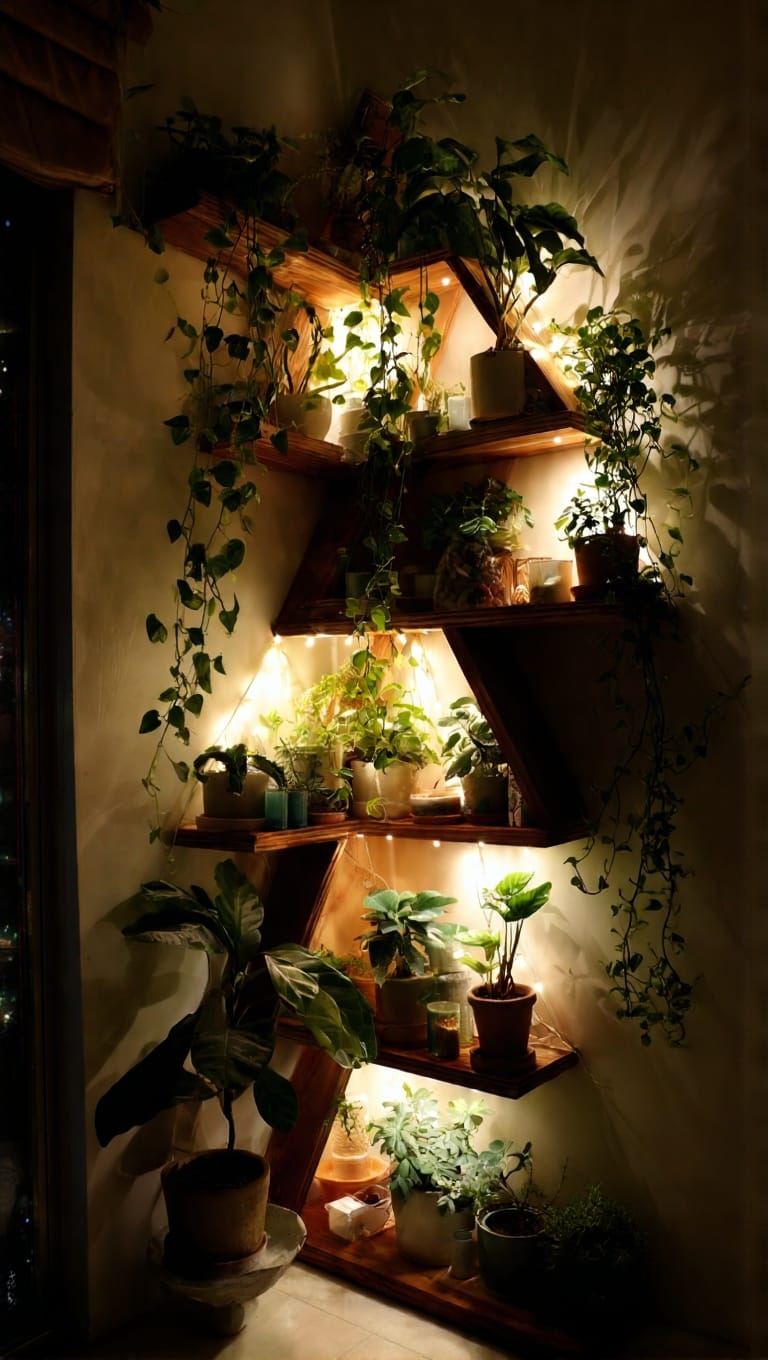
Using Corners to Create Space-Saving Green Features

Corners are often underutilized in interior design, yet they are ideal for vertical plant installations. Corner-mounted shelves maximize height without consuming floor space, making them perfect for apartments or small rooms.

By stacking shelves vertically and varying plant sizes, you create a green feature wall that feels expansive rather than cluttered.

WhatsApp Image 2026-01-08 at 3.18.25 AM

Final Thoughts: Are Indoor Vertical Plant Displays Worth It?

Absolutely. Indoor vertical plant displays offer a rare combination of functionality, beauty, and wellness benefits. They improve air quality, reduce visual emptiness, and create a calming environment—especially when enhanced with thoughtful lighting and natural materials.

Inspired by the images above, this design approach proves that even the smallest wall or corner can become a living art installation with the right balance of structure and greenery.

If you are designing for Pinterest-driven traffic or lifestyle blogs, vertical plant displays are a high-engagement, evergreen topic that performs exceptionally well year-round.
28

DIY Homemade Water Fountain Ideas: Bring Serenity to Your Space

28

DIY Homemade Water Fountain Ideas: Bring Serenity to Your Space

The gentle sound of trickling water can transform a hectic backyard or a quiet room into a peaceful sanctuary. You don't need a massive budget or a professional landscaper to bring this magic home. With a simple submersible pump and a spark of creativity, you can build a stunning water feature this weekend.

Whether you want a rustic wine barrel for your patio or a zen tabletop piece for your office, these homemade water fountain ideas are designed for every skill level.

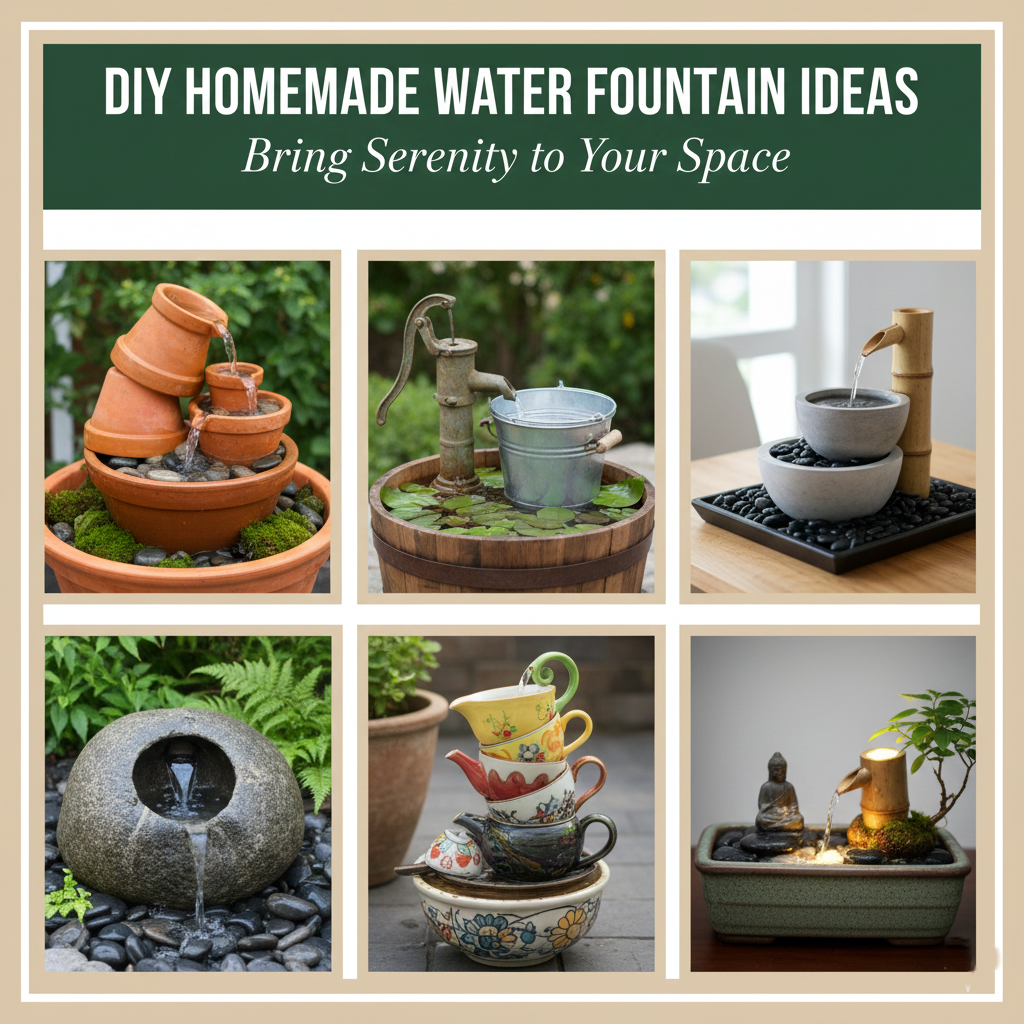
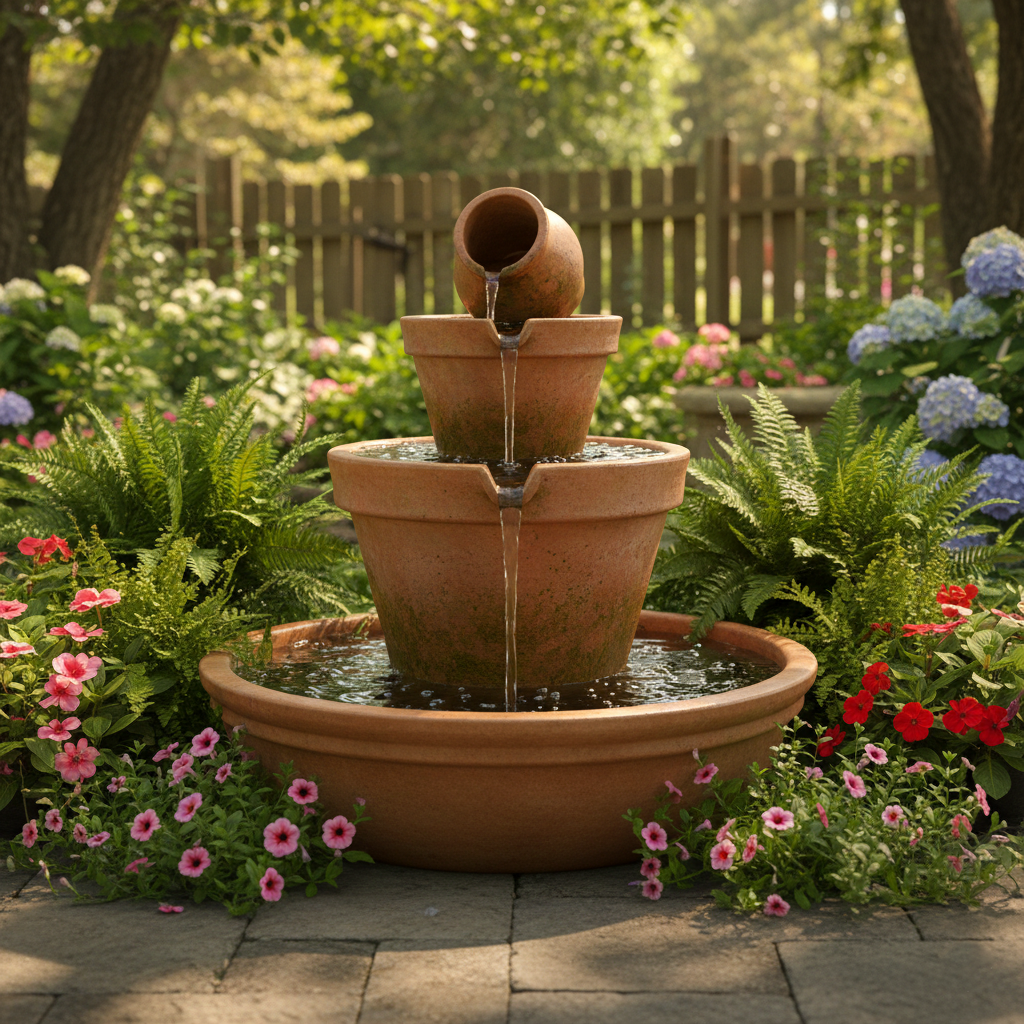
1. The Classic Tiered Flower Pot Fountain

This is perhaps the most popular DIY fountain because it’s incredibly easy to customize. By stacking terra-cotta or ceramic pots of decreasing sizes, you create a beautiful cascading effect.

  • Materials: Three different-sized pots, a small submersible pump, plastic tubing, and waterproof sealant.

  • The Secret: Seal the drainage holes of the bottom pots but leave the top one open for the tubing to pass through.

  • Pro Tip: Use "pot toes" or bricks inside the larger pots to act as pedestals for the smaller ones.


The Classic Tiered Flower Pot Fountain

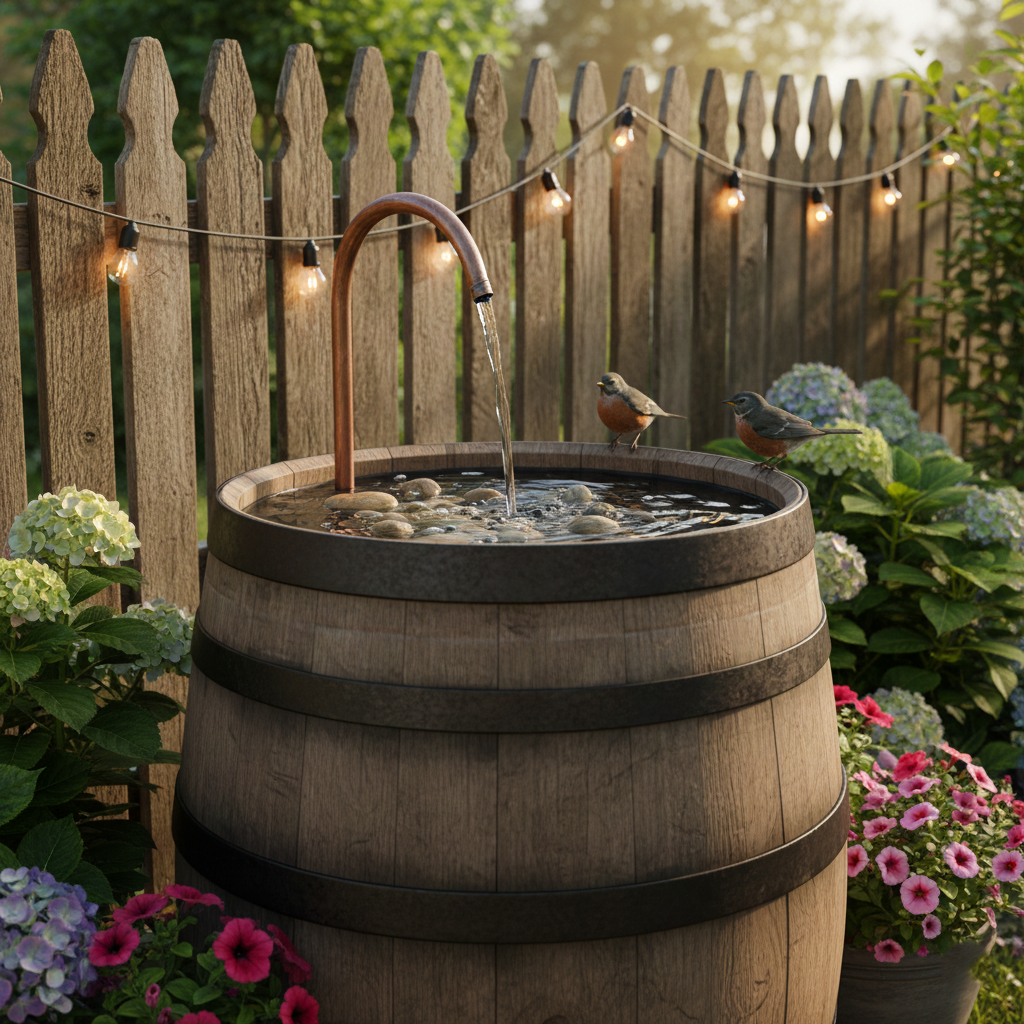
2. The Rustic Wine Barrel Waterfall

Perfect for a farmhouse or cottage-style garden, a wine barrel fountain adds instant character. It’s sturdy, holds a large volume of water, and creates a deep, resonant splashing sound.

  • Semantic Keywords: Rustic decor, garden focal point, pond liner, water circulation.

  • How to do it: Line a wooden barrel with a heavy-duty plastic liner to prevent rotting. Add a pump at the bottom and a decorative copper spout at the top to direct the water back into the basin.

  • Experience Note: These are great for attracting birds! I’ve seen robins and finches use the edge of a barrel fountain as a personal birdbath.

The Rustic Wine Barrel Waterfall

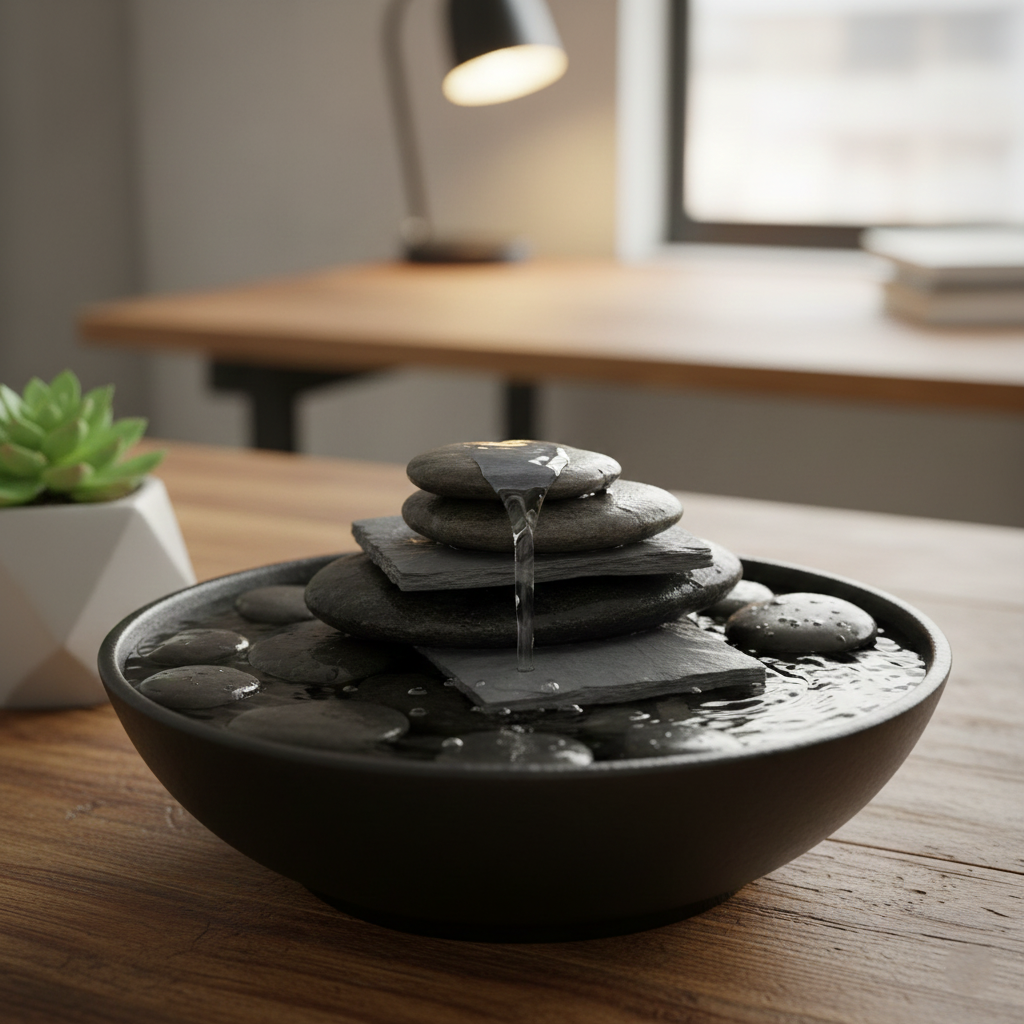
3. Zen Tabletop Stone Fountain

If you live in an apartment or want to enhance your workspace, a tabletop fountain is the answer. It fits on a desk and provides "white noise" to help you focus or sleep.

  • Steps:

    1. Find a watertight ceramic bowl.

    2. Place a tiny 3V submersible pump in the center.

    3. Cover the pump with polished river stones or slate.

    4. Fill with water until the stones are partially submerged.

  • Why it works: It’s low maintenance and costs less than $20 to make.


Zen Tabletop Stone Fountain

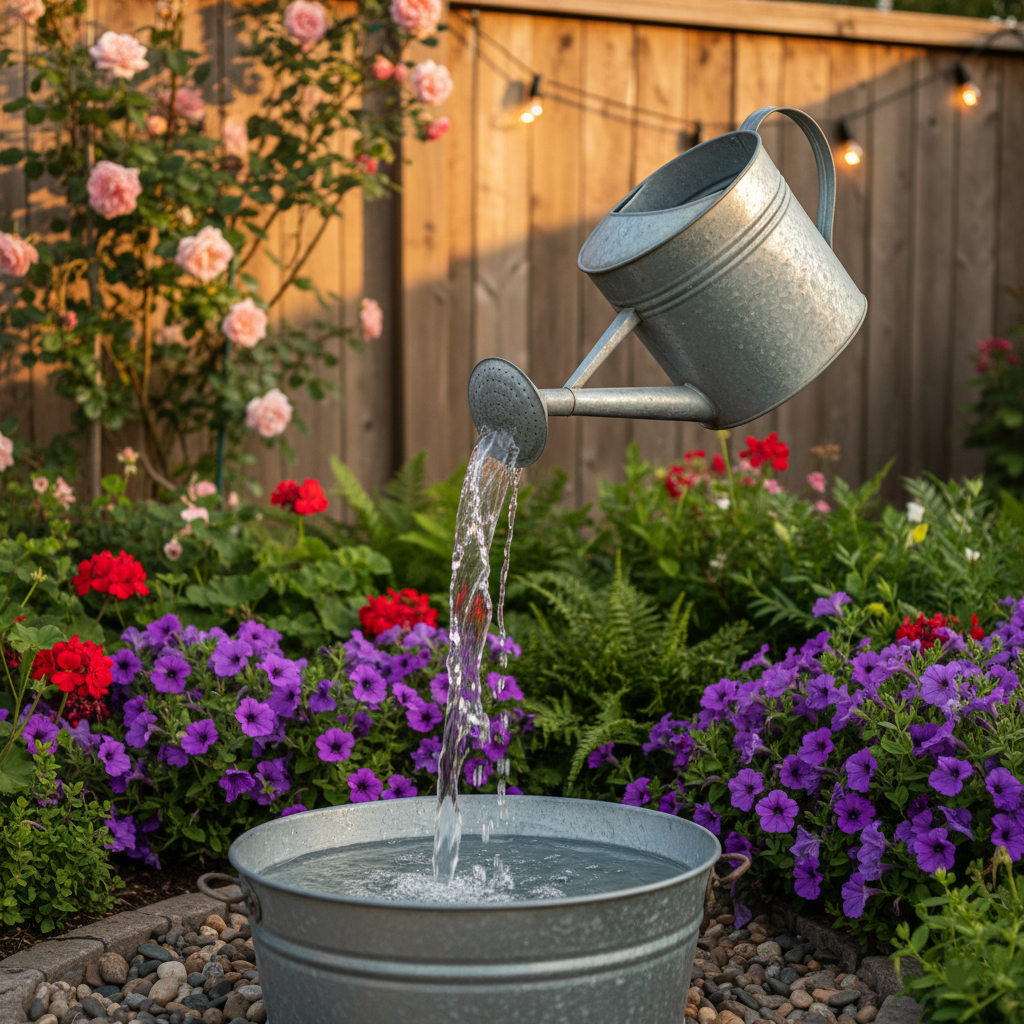
4. The "Magic" Floating Watering Can

This project looks like an optical illusion. It appears as though a watering can is floating in mid-air, endlessly pouring water into a bucket or tub below.

  • The Trick: A rigid clear plastic tube supports the watering can. The pump sits in the bottom basin and pushes water up the tube. The water then spills down the outside of the same tube, hiding it from view.

  • Geo-Targeting Tip: In windier areas like the Great Plains, ensure your base bucket is weighted with heavy rocks so the "floating" can doesn't tip over.

 
The Magic Floating Watering Can

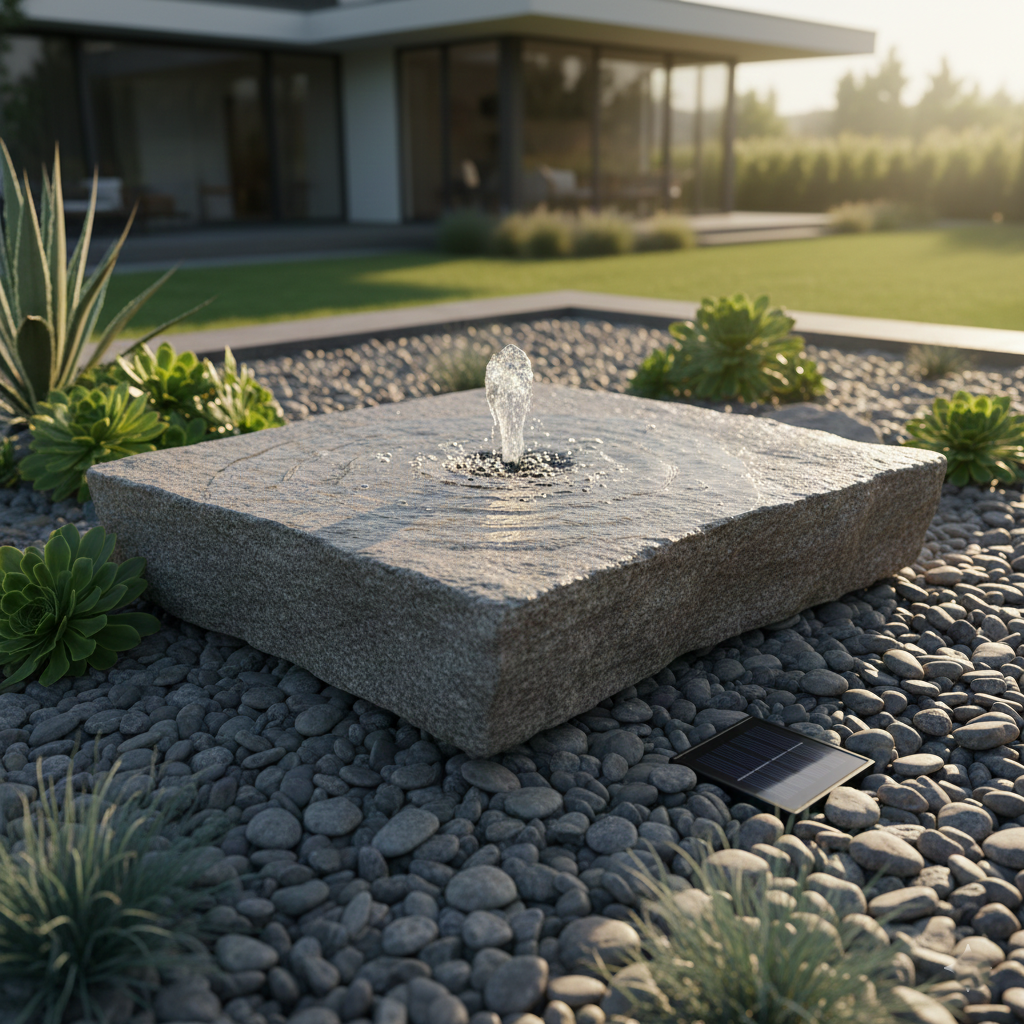
5. Solar-Powered Bubbling Rock

Don't want to mess with electrical cords? A solar-powered fountain is your best friend. This "disappearing" fountain style looks like water is bubbling directly out of the earth.

  • Components: A waterproof basin buried underground, a solar pump, a heavy-duty mesh screen, and a large decorative rock with a hole drilled through it.

  • Maintenance: Since the reservoir is covered by rocks, evaporation is slower, and the water stays cleaner for longer.

Solar-Powered Bubbling Rock
15

Mini Japanese Garden for Small Spaces: Calm, Balance, and Quiet Beauty

15

Mini Japanese Garden for Small Spaces: Calm, Balance, and Quiet Beauty

A Japanese garden is not about size.
It is about feeling.

Even the smallest space can hold peace.
A mini Japanese garden invites stillness into daily life.

With thoughtful design, small areas become meaningful retreats.

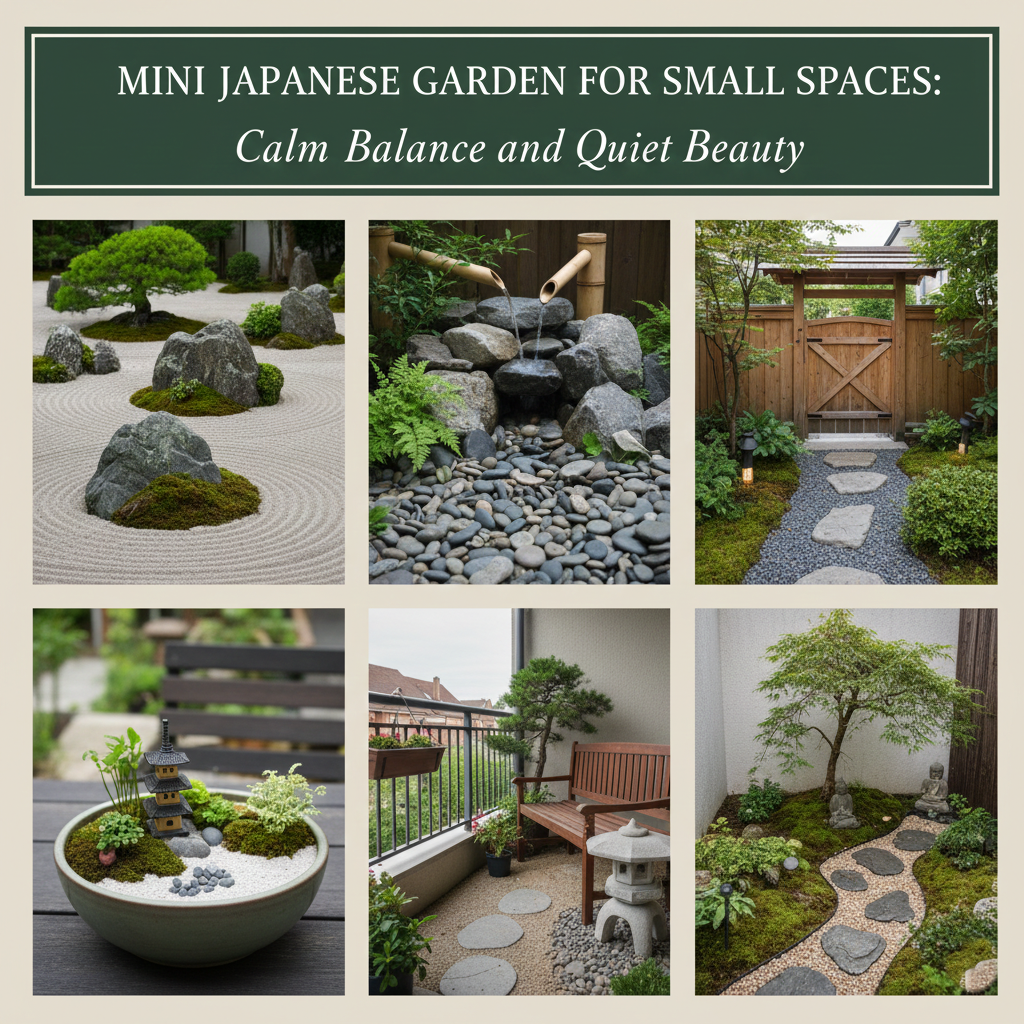
Core Principles of a Mini Japanese Garden

Japanese gardens follow philosophy, not decoration.
Every element has purpose.

Balance and simplicity matter most.
Nothing feels random.

Key Design Principles

  • Asymmetry over symmetry

  • Empty space for calm

  • Natural materials only

  • Subtle movement and flow

Avoid filling every corner.
Silence is part of the design.

A mini garden should feel timeless.
Not styled or trendy.

whitestone

Best Layout Ideas for Small Japanese Gardens

Small spaces need clear structure.
Flow matters more than size.

Corners, balconies, and patios work well.
Even narrow areas can feel expansive.

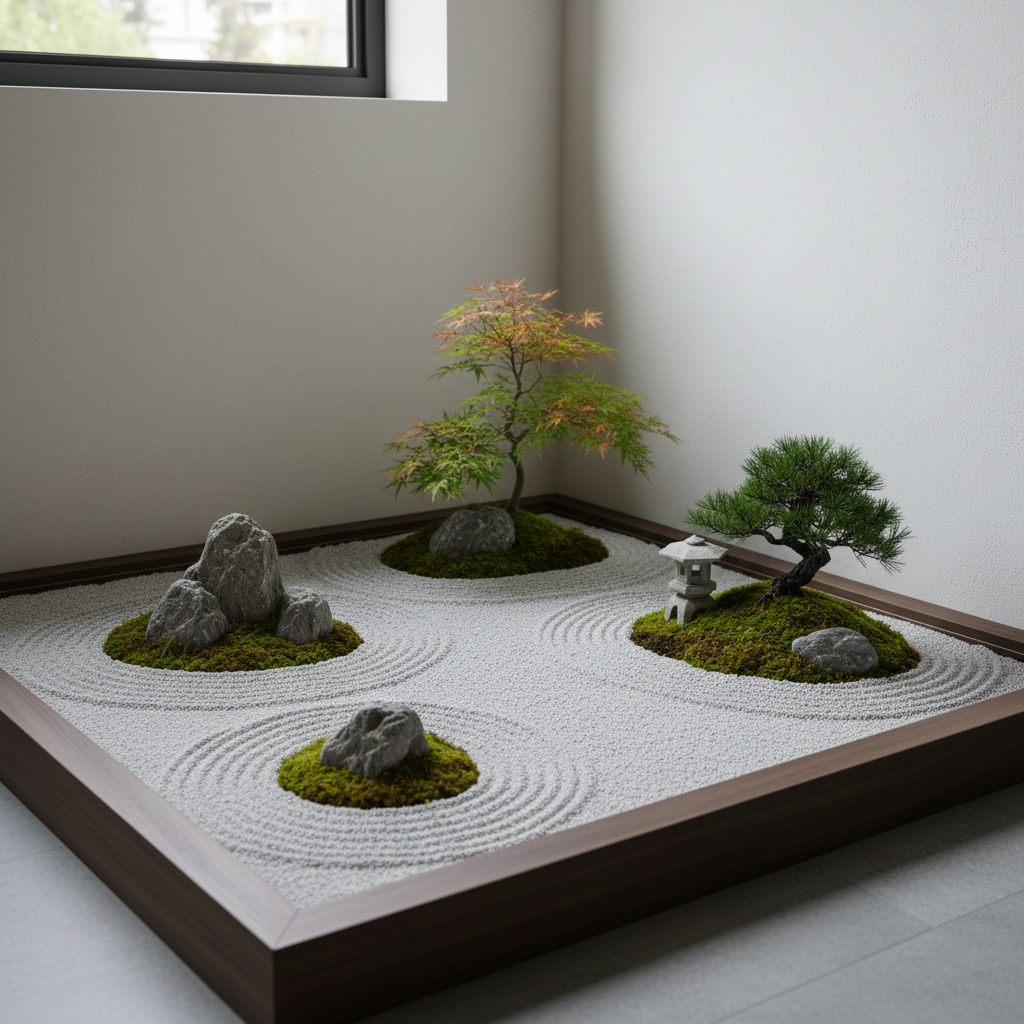
Smart Layout Options

  • Corner garden with stone focus

  • Linear path with gravel

  • Circular moss arrangement

  • Raised tray garden for patios

Keep sightlines open.
This creates visual depth.

Good layout makes the garden breathe.
It feels calm, not crowded.

small plents

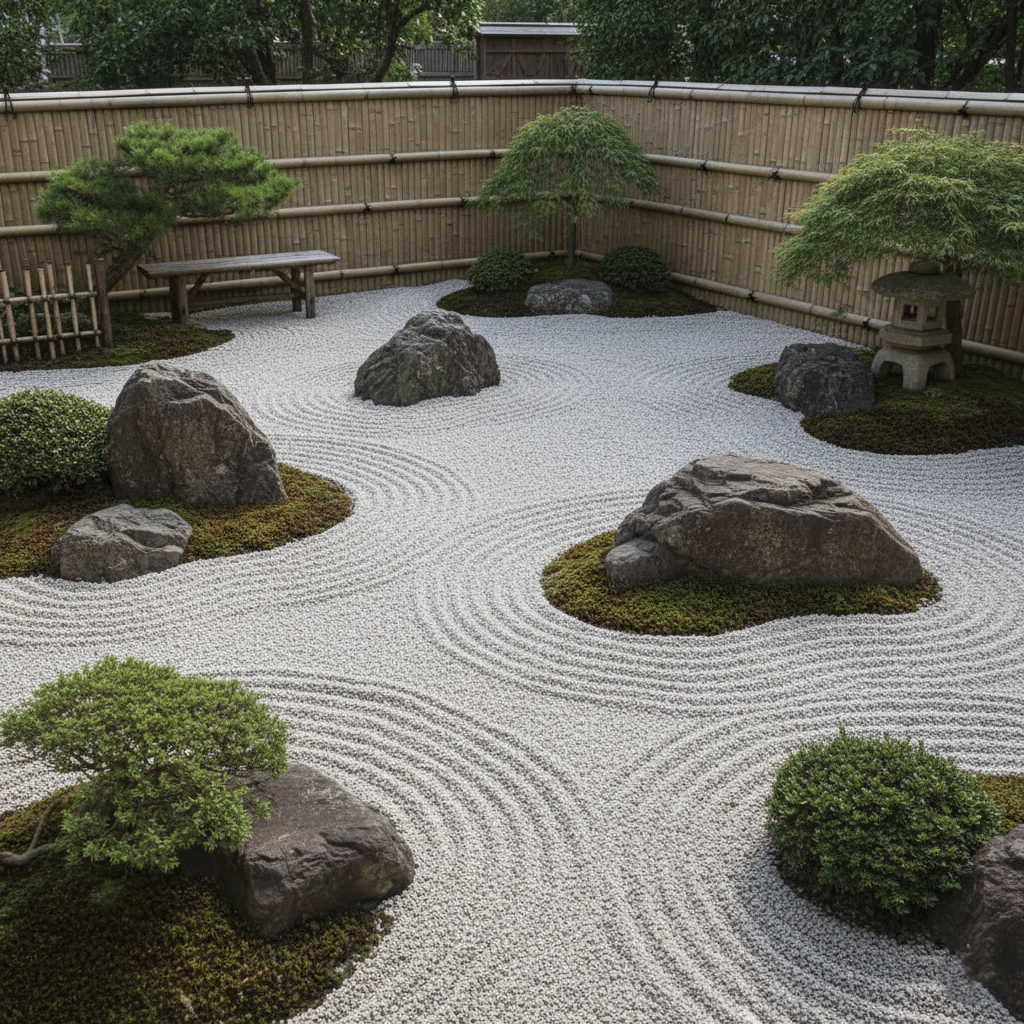
Choosing Stones, Gravel, and Hardscape Elements

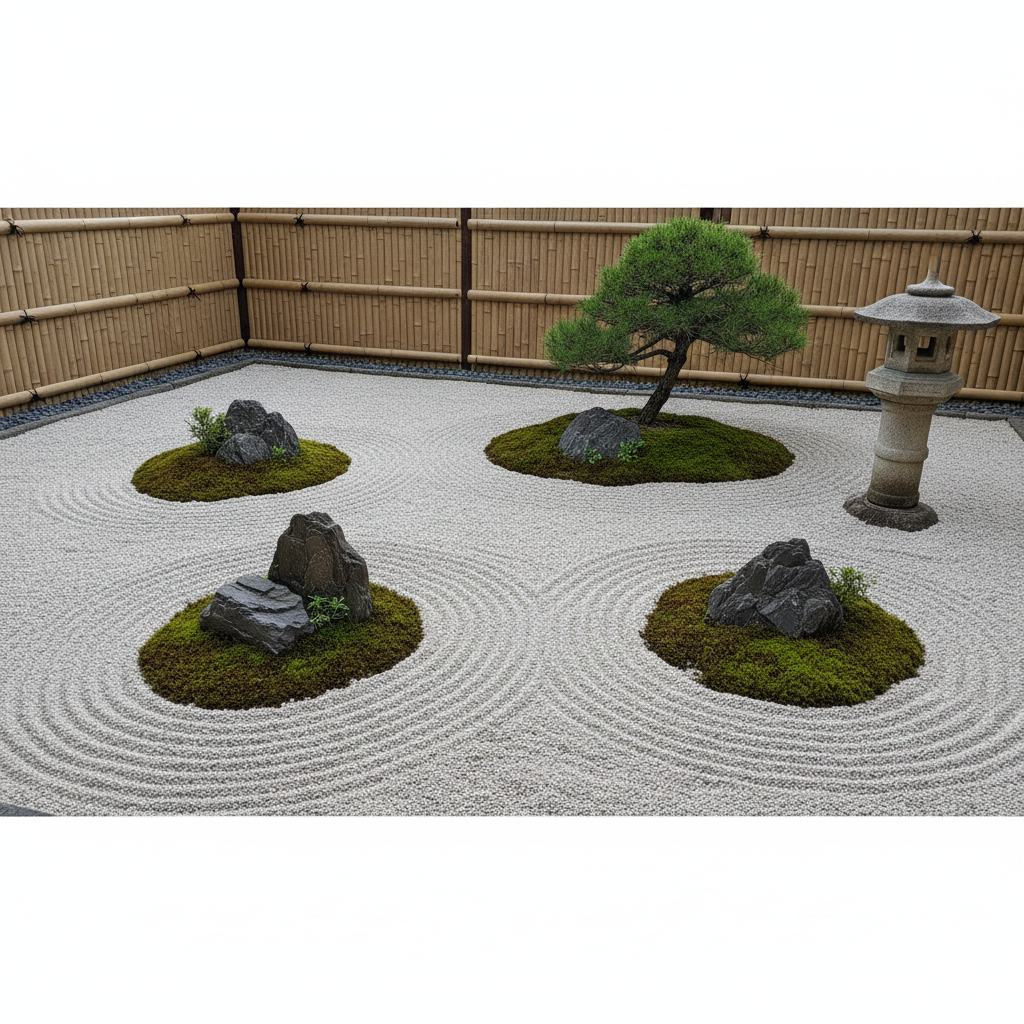
Stone is the backbone of Japanese gardens.
It represents permanence.

Gravel symbolizes water and movement.
Raked patterns add rhythm.

Essential Hardscape Elements

  • Natural stones with irregular shapes

  • White or gray gravel

  • Stone lanterns in small scale

  • Stepping stones for guidance

Bury stones slightly.
They should feel settled.

Hardscape creates structure.
It holds the garden together.

smallbuillding

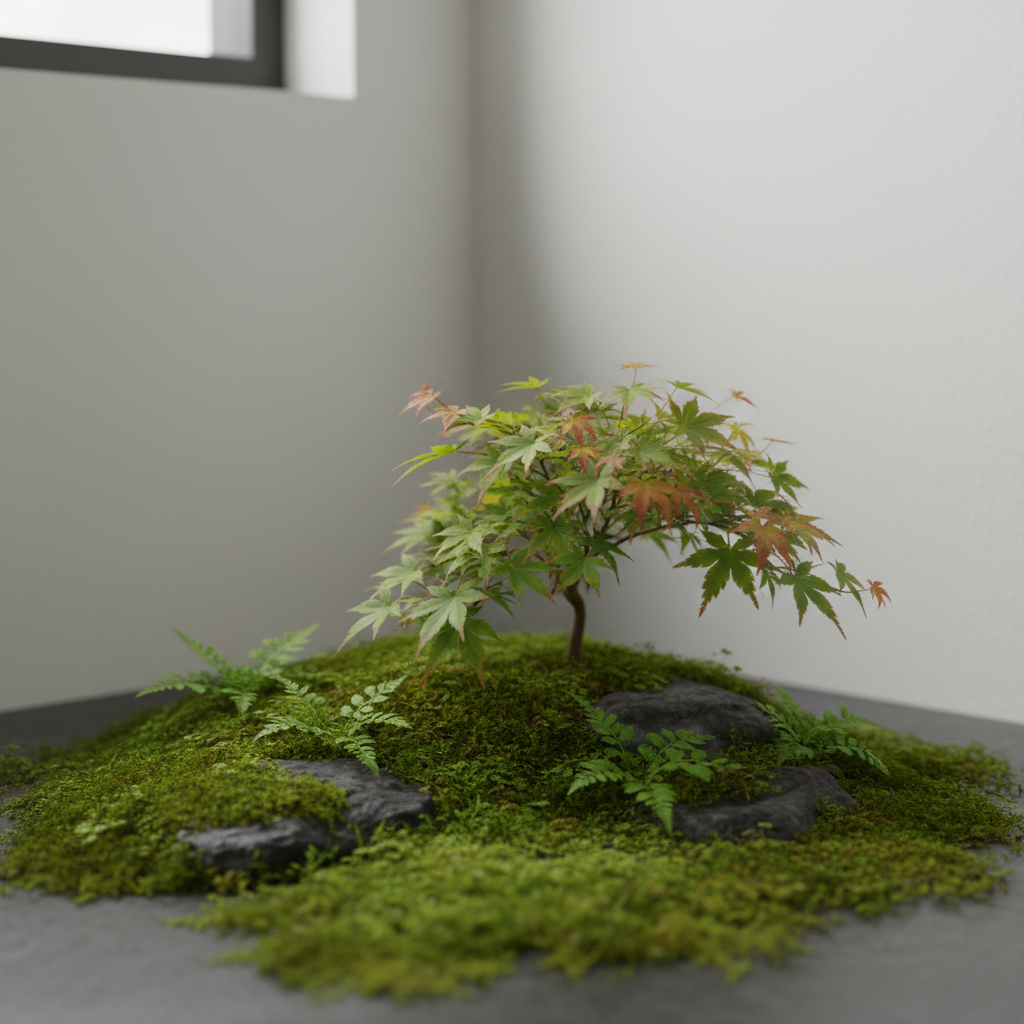
Plants That Work Best in Mini Japanese Gardens

Stone is the backbone of Japanese gardens.
It represents permanence.

Gravel symbolizes water and movement.
Raked patterns add rhythm.

Essential Hardscape Elements

  • Natural stones with irregular shapes

  • White or gray gravel

  • Stone lanterns in small scale

  • Stepping stones for guidance

Bury stones slightly.
They should feel settled.

Hardscape creates structure.
It holds the garden together.

greenminiplents

Adding Water and Decorative Accents Subtly

Water adds life and sound.
It should feel gentle.

Even symbolic water works well.
Gravel patterns often replace real water.

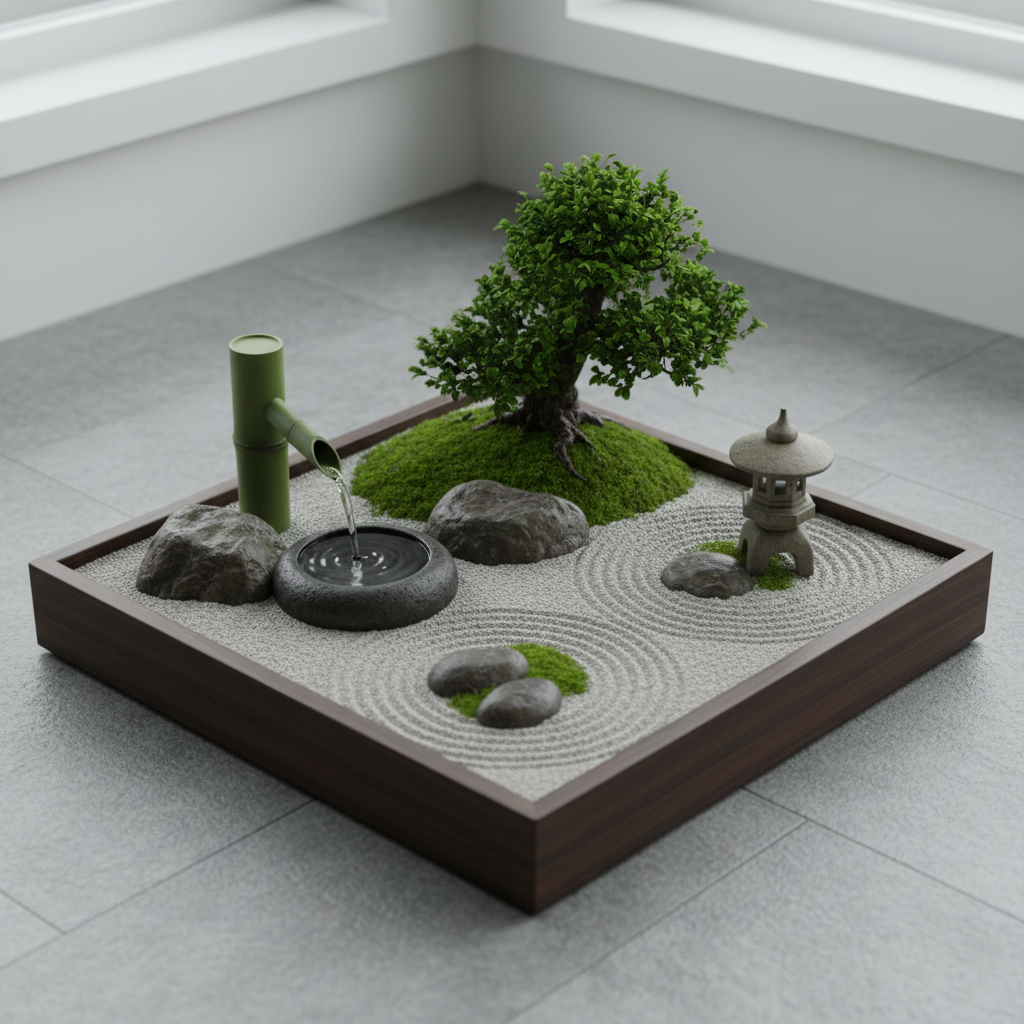
Subtle Accent Ideas

  • Small stone water basin

  • Bamboo water feature

  • Simple wooden bridge

  • Single stone lantern

Use accents sparingly.
One focal piece is enough.

The goal is reflection.
Not decoration.

waterplents

Final Thoughts: Why Mini Japanese Gardens Feel So Powerful

A mini Japanese garden teaches presence.
It slows the mind.

It proves that peace does not need space.
Only intention.

With thoughtful design, even the smallest corner becomes a sanctuary.
A place to pause, breathe, and reconnect.

9

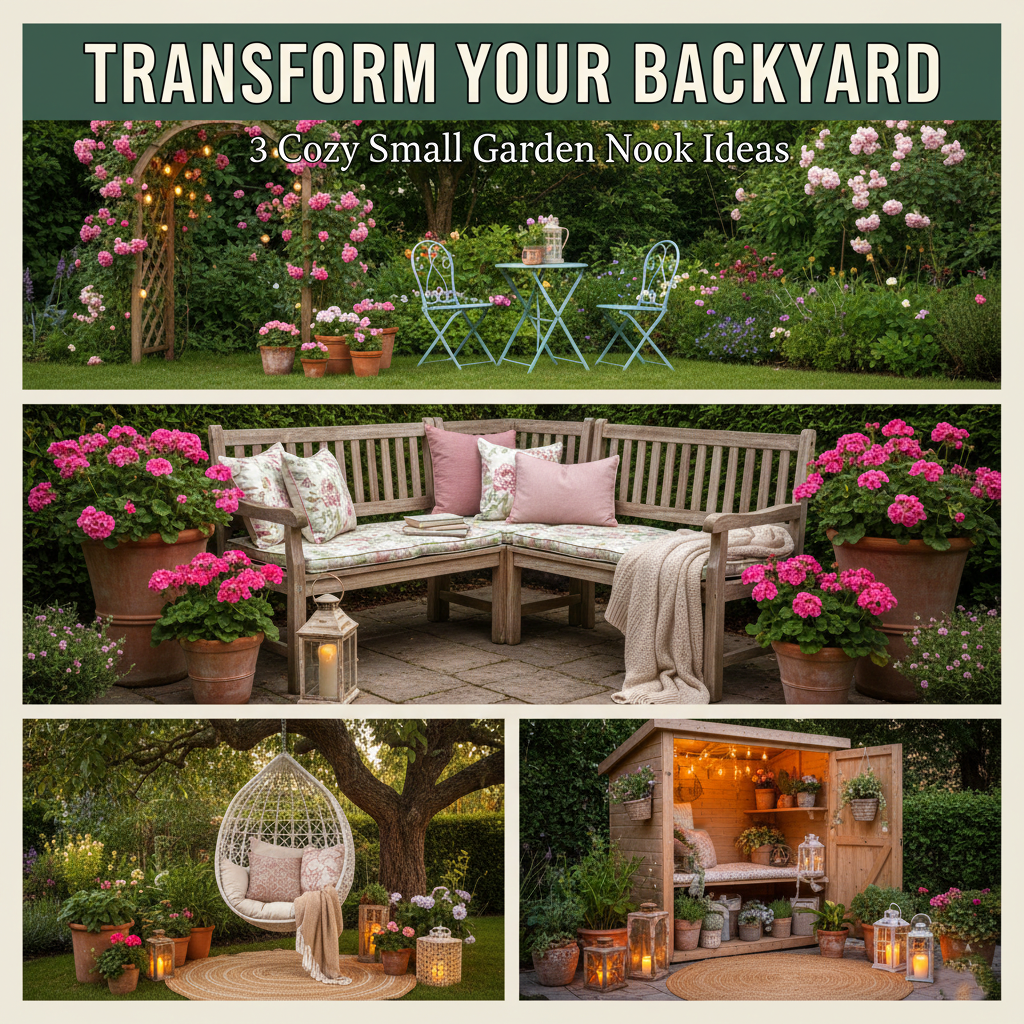
Transform Your Backyard: 3 Cozy Small Garden Nook Ideas

9

Transform Your Backyard: 3 Cozy Small Garden Nook Ideas

Do you have a forgotten corner in your yard? Perhaps it's a tight squeeze between your garage and a fence, or a small patio that feels more like a passageway than a place to unwind. Even the smallest patch of dirt or concrete can become a profound sanctuary. You don’t need a massive estate to find peace outdoors; sometimes, the most intimate spaces offer the most profound sense of calm.

Creating a garden nook is about more than just decor; it's about carving out a personal haven. Imagine a quiet spot for your morning coffee, a sun-drenched corner for reading, or a sheltered retreat where you can simply watch the clouds drift by. It’s about making a connection with nature, even in an urban setting. Let’s explore how to transform those tiny, overlooked gaps into your favorite "room" in the house—a place that feels utterly your own.

1. Define Your Nook with Vertical Interest

When floor space is tight, your most valuable asset is often overlooked: vertical space. Think upwards! Using height effectively can create a remarkable sense of enclosure, privacy, and lushness, making a small area feel much more significant and immersive.

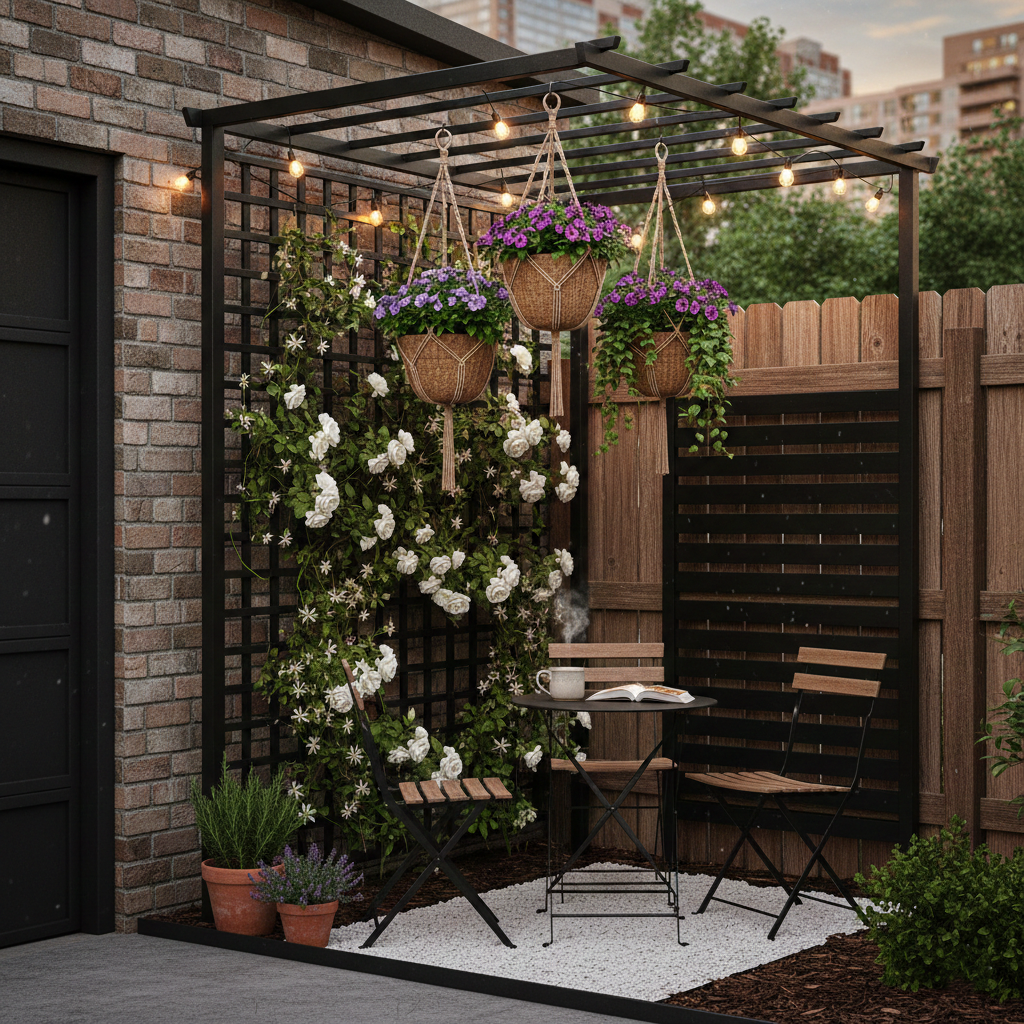
  • Install a Trellis: A simple trellis attached to a wall or fence can be a game-changer. Imagine fragrant climbing roses reaching for the sky, or delicate jasmine weaving its way through the lattice, releasing its intoxicating scent on a warm evening. These living walls add beauty and a natural "hug" to your nook. They also provide a beautiful backdrop for your seating area.

  • Hanging Planters: Don't let precious ground go unused. Suspend baskets brimming with cascading ferns, vibrant petunias, or even trailing herbs. This draws the eye upward, creating layers of greenery and saving valuable floor space below. You can use hooks from an overhang, a pergola, or even a sturdy tree branch.

  • Privacy Screens: If you need a quick and stylish way to block an undesirable view or simply enhance the feeling of seclusion, consider a decorative privacy screen. A slatted wooden panel, a bamboo screen, or even a metal art piece can add architectural interest while providing a visual barrier. They offer shade and can transform an exposed area into a cozy hideaway.


Vertical Interest

2. Choose the Right Seating for Small Spaces

The seating is the heart of your garden nook; it’s where you’ll spend your time relaxing. But huge patio sets will quickly overwhelm a small area, making it feel cramped and uncomfortable. In a small space, scale is absolutely everything. You need pieces that are proportionate, functional, and perhaps even multi-purpose.

  • Bistro Sets: These classic metal or wooden sets are a staple for a reason. They are typically compact, often featuring a small round table and two chairs. Many designs fold away easily, which is perfect for maximizing flexibility. They evoke a charming, European cafe vibe and are ideal for intimate conversations or a solo meal outdoors.

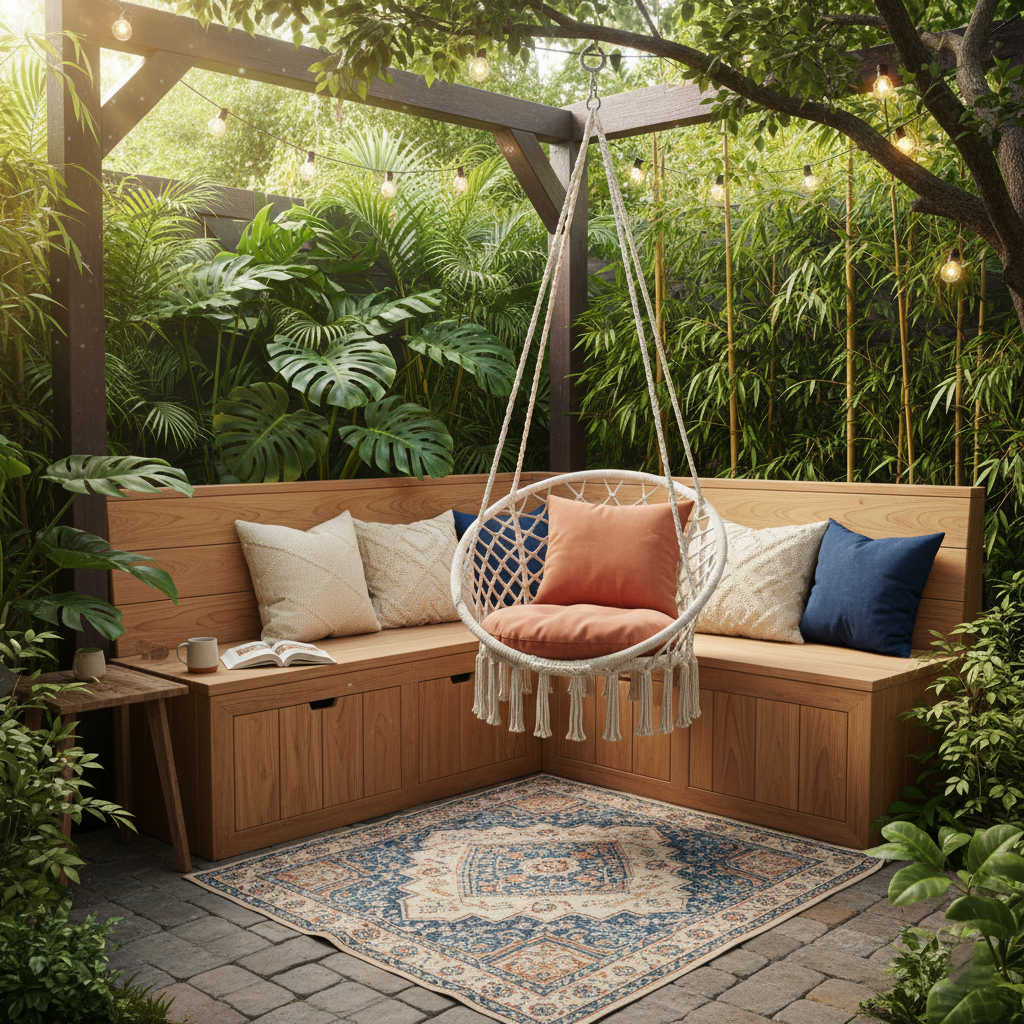
  • Built-in Benches: For truly tiny or awkward spaces, custom-built benches are an absolute dream. An L-shaped bench, for instance, can maximize every single inch of available space, fitting snugly into a corner. As an added bonus, the area underneath a built-in bench can be designed for hidden storage—perfect for stashing cushions, gardening tools, or even extra blankets for chilly evenings.

  • Hammocks or Swings: If ultimate relaxation is your goal, consider a hammock or a hanging chair/swing. These pieces create a playful, bohemian vibe and offer incredible comfort. The best part? Many designs take up very little to no floor space, as they are suspended from a sturdy beam, a tree, or a dedicated stand. Imagine gently swaying in the breeze with a good book!

Right Seating for Small Spaces

3.Use Color and Light to Set the Mood

A garden nook isn't just for daytime enjoyment. The magic truly begins once the sun starts to set, and the right lighting can transform a simple outdoor space into a mesmerizing, intimate retreat. Beyond illumination, strategic use of color can breathe life and personality into your small haven.

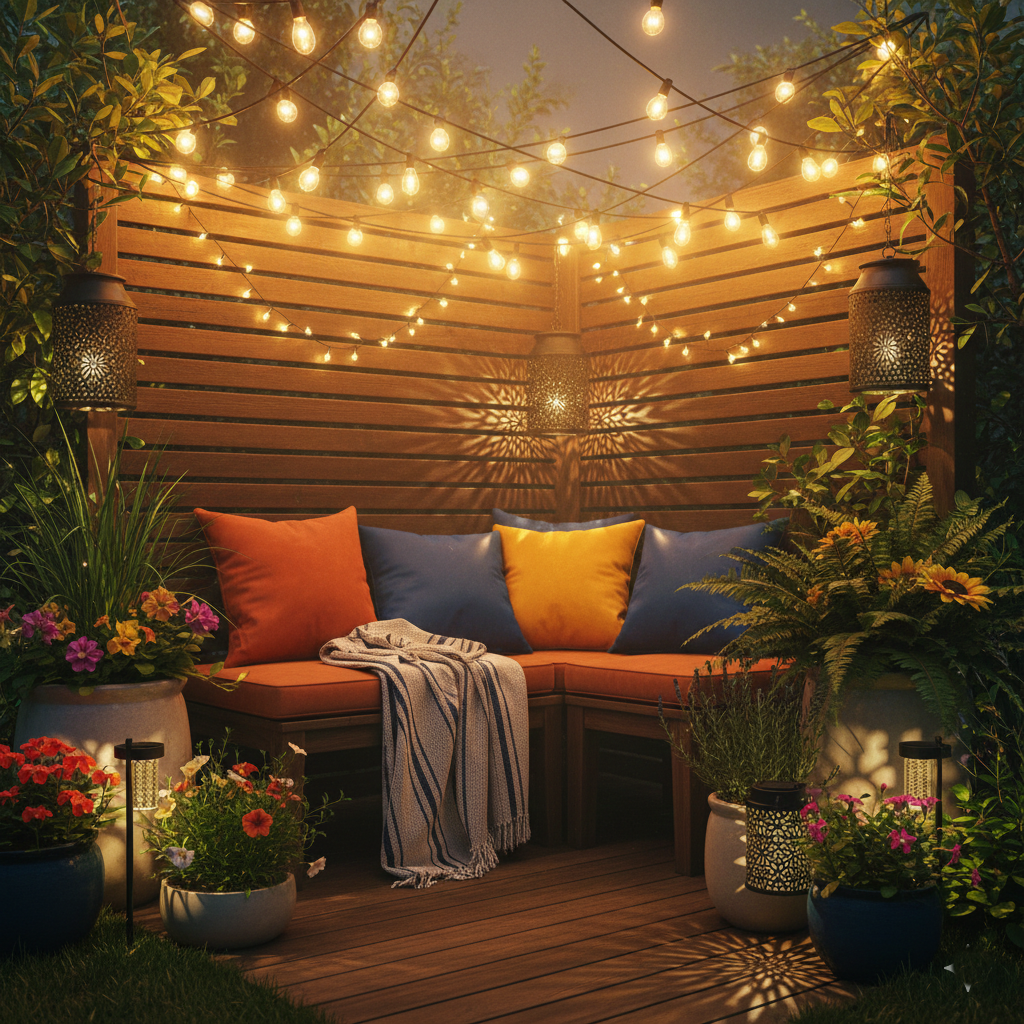
  • Warm String Lights: These are perhaps the easiest and most impactful way to add ambiance. Drape Edison-bulb string lights across a fence, weave them through a trellis, or suspend them overhead from a pergola. The warm, soft glow instantly creates a cozy and inviting atmosphere, perfect for evening gatherings or quiet contemplation. They feel incredibly festive and charming.

  • Solar Lanterns: For pathways or to highlight specific plants, solar-powered lanterns are both eco-friendly and wonderfully convenient. They charge during the day and automatically light up at dusk, providing gentle illumination without the need for unsightly wires or outlets. You can place them on tables, hang them from hooks, or stake them into the ground.

  • Bold Cushions: Don't underestimate the power of textiles! While the greenery provides natural color, vibrant cushions and throw pillows can inject a massive dose of personality and comfort. Choose hues that complement your plants, like lush emerald greens, or opt for bold contrasts such as terracotta reds, sunny yellows, or deep blues. These colors make your seating area pop and invite you to settle in.

Light to Set the Mood